City Physio & Pilates | Expert Insights | Pelvic Pain & Sacroiliac Joint Rehabilitation
Sacroiliac Joint Pain: Why It’s So Often Missed — and What Proper Treatment Looks Like
The Joint Nobody Talks About That Could Be Behind Your Back, Hip, or Pelvic Pain
You’ve been told it’s your lower back. Or your hip. Or possibly sciatica. You’ve had standard physiotherapy, perhaps some massage, maybe a course of anti-inflammatories. The pain improves a little, then comes back. It’s there when you walk, when you roll over in bed, when you stand up from your chair after a long meeting. One side of your pelvis feels heavier, or different, or simply wrong in a way that’s hard to articulate.
If this pattern sounds familiar, there is a meaningful chance that the sacroiliac joint (SIJ) — one of the most consistently misdiagnosed sources of pain in the lower body — is at the centre of it.
At City Physio & Pilates in Martin Place, Sydney CBD, SIJ assessment and management is one of our clinical specialities. We treat hundreds of sacroiliac joint presentations every year, including a significant proportion of patients who come to us after months or years of unsuccessful management elsewhere — because the joint was never properly identified as the source of their pain.
This article explains what the sacroiliac joint is, why it causes so much trouble when it goes wrong, and what evidence-based, expert-level management actually looks like.
What Is the Sacroiliac Joint? Anatomy and Function
The sacroiliac joint is the articulation between the sacrum — the triangular bone at the base of the spine — and the ilium — the large, wing-shaped bones of the pelvis, one on each side. There are two SIJs, one on either side of the sacrum, forming the posterior aspect of the pelvic ring.
Structurally, the SIJ is a synovial joint with an irregular, interlocking surface that resists movement while allowing the small amounts of motion necessary for shock absorption and load transfer during walking, running, and lifting. The joint surfaces are covered with cartilage — hyaline cartilage on the sacral surface, fibrocartilage on the iliac surface — and enclosed within a synovial capsule.
What makes the SIJ unique is its extraordinary passive stability, provided by some of the strongest ligaments in the human body:
- The posterior sacroiliac ligaments — massive, dense structures running across the back of the joint, providing the primary resistance to anterior sacral rotation
- The interosseous sacroiliac ligament — the strongest ligament in the body, filling the space between the sacrum and ilium and binding the two bones together with extraordinary tensile strength
- The sacrospinous and sacrotuberous ligaments — controlling sacral rotation and nutation, and forming the structural boundary of the greater and lesser sciatic notches
This passive ligamentous system is reinforced by an equally important dynamic muscular system — the gluteus maximus, gluteus medius, piriformis, biceps femoris, deep hip external rotators, pelvic floor musculature, multifidus, and the abdominal wall all contribute to active SIJ compression and stabilisation through what researchers call the force closure mechanism.
The clinical implication of this dual stabilisation system: SIJ pain can arise from failure of either the passive ligamentous system (trauma, hypermobility, pregnancy-related laxity) or the active muscular system (weakness, poor coordination, inhibition following pain or injury) — and distinguishing between these mechanisms determines the treatment approach.
What Does the Sacroiliac Joint Actually Do?
Despite being one of the least mobile joints in the body — allowing only 1 to 4 degrees of rotation and 1 to 2mm of translation under normal conditions — the SIJ plays a disproportionately important role in whole-body biomechanics.
Its primary functions are:
Load transfer between the spine and lower limbs — every force that travels from the ground up through the legs to the spine, and from the spine down through the legs to the ground, passes through the SIJ. Standing, walking, running, climbing stairs, lifting, and landing from a jump all require the SIJ to efficiently transfer these forces without allowing the pelvic ring to buckle or absorb excessive stress at any single point.
Shock absorption — the small but real movement available at the SIJ, combined with its fibrocartilaginous surfaces, contributes to the attenuation of impact forces during gait and landing.
Pelvic ring integrity during asymmetrical loading — during single-leg stance phases of walking and running, the pelvic ring is subjected to significant asymmetrical forces. The SIJ — acting in concert with the pubic symphysis anteriorly — maintains the structural integrity of the ring under these conditions.
When SIJ function is compromised — whether through joint stiffness, hypermobility, malalignment, or muscular insufficiency — the consequences extend well beyond local pain. Altered load transfer through the pelvis creates compensatory movement patterns at the lumbar spine, hips, and knees. Lower back pain, hip pain, groin pain, and even knee pain can all have their roots in SIJ dysfunction that has never been properly identified.
What Causes Sacroiliac Joint Pain?
SIJ pain arises when the normal balance between joint mobility and stability is disrupted — either through the joint becoming too restricted (hypomobile) or too mobile (hypermobile or unstable). Both states produce pain, but through different mechanisms and requiring different treatments.
Common causes and contributing factors:
Pregnancy and the postpartum period This is the most significant risk factor for SIJ instability. The hormone relaxin, produced in increasing quantities from early pregnancy, progressively reduces the stiffness of the ligamentous system — including the posterior SIJ and sacrotuberous ligaments — to allow the pelvic ring to expand during delivery. The result is a joint that is simultaneously under greater mechanical demand (increased body weight, altered centre of gravity) and less passively stable. Pelvic girdle pain — the clinical term for pregnancy-related SIJ and pubic symphysis dysfunction — affects up to 20% of pregnant women and can persist well into the postpartum period, particularly when the ligamentous laxity is not compensated by adequate pelvic floor and deep stabiliser activation.
Traumatic injury A fall directly onto the buttock, a motor vehicle accident, or a high-impact landing can disrupt the SIJ ligamentous system acutely. Post-traumatic SIJ dysfunction may involve joint subluxation, ligamentous sprain, or a combination of both, and requires careful assessment to characterise the injury and determine the appropriate management pathway.
Postural dysfunction and sustained asymmetrical loading Prolonged sitting in asymmetrical positions — crossing legs, leaning habitually to one side, carrying a heavy bag on one shoulder — creates sustained, low-level asymmetrical loading of the SIJ that over time can produce joint irritation, capsular tightening, and secondary muscular imbalance. This is a particularly common pattern in desk workers and is entirely consistent with the Martin Place patient profile we see at City Physio.
Hypermobility syndromes Generalised ligamentous hypermobility — including hypermobile Ehlers-Danlos syndrome (hEDS) and related connective tissue disorders — significantly increases SIJ vulnerability. The joint lacks passive restraint and is dependent on muscular stabilisation to maintain normal mechanics. Patients with hypermobility who develop SIJ pain frequently have a history of recurrent “going out” sensations in the pelvis, difficulty with sustained standing and walking, and inconsistent response to manual therapy approaches that work by restoring mobility (because mobility is not their problem).
Leg length discrepancy Even a relatively small leg length difference creates persistent asymmetrical loading of the pelvis, concentrating stress through one SIJ across every walking step. Over time, this produces progressive joint irritation and secondary muscular compensation patterns.
Training errors and overuse Sudden increases in running volume, asymmetrical sporting activities (single-leg dominant sports, asymmetrical throwing patterns), and repeated high-impact loading without adequate posterior chain strength can all overload the SIJ’s force closure mechanism and produce pain.
Recognising SIJ Pain: Symptoms and Clinical Presentation
SIJ pain has a characteristic clinical profile — but it overlaps significantly with lumbar disc pain, hip joint pathology, and deep gluteal syndrome, which is why accurate clinical diagnosis rather than assumption-based treatment is essential.
Classic features of SIJ pain include:
- Unilateral (one-sided) posterior pelvic pain — typically localised to the area over the posterior SIJ, just medial to the posterior superior iliac spine (PSIS). Patients often point to this area with one finger — what clinicians call the “Fortin finger sign” — which has reasonable diagnostic specificity for SIJ involvement.
- Pain with weight-bearing through the affected side — standing on one leg, climbing stairs, stepping up onto a kerb
- Pain with transitional movements — standing up from a chair, rolling over in bed, getting in and out of a car. These are tasks requiring the pelvis to transfer load asymmetrically and are characteristically provocative in SIJ dysfunction.
- Pain crossing the midline into the buttock — SIJ pain frequently radiates into the buttock and occasionally into the posterior thigh, mimicking sciatica. However, it rarely extends below the knee, does not follow a dermatomal distribution, and is not associated with neurological signs (numbness, weakness, reflex changes).
- Pelvic asymmetry — patients frequently describe a sensation of one hip sitting higher or further forward than the other, or a feeling that the pelvis is “twisted” or “out”
- Pain with prolonged sitting or standing — SIJ pain is typically load-dependent and positional, worsening with sustained postures that concentrate stress on the joint
Why Experience and Clinical Precision Matter
Here is where City Physio’s approach genuinely differentiates itself — and why patients who have cycled through generic physiotherapy without resolution so frequently find clarity when they come to us.
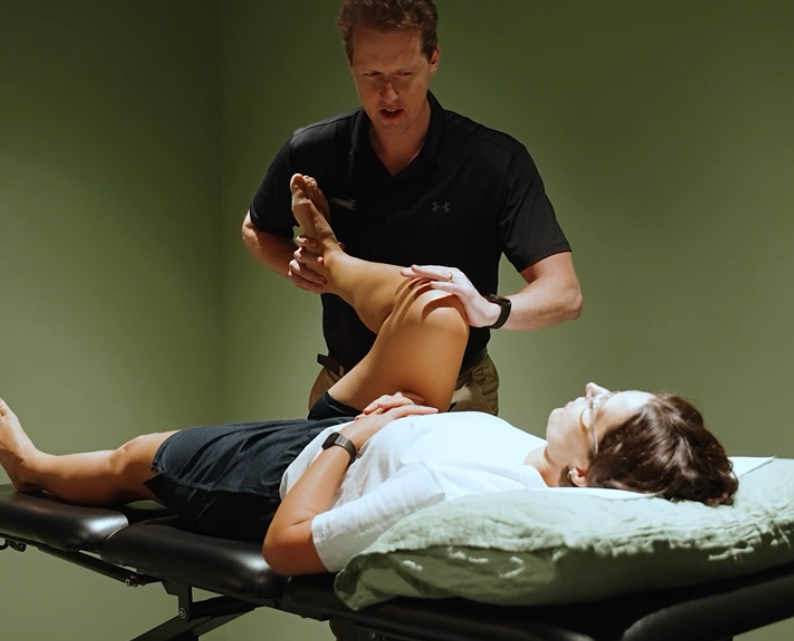
Accurate SIJ assessment requires the ability to detect subtle pelvic asymmetries, sacral torsions, and iliac rotations that standard physiotherapy assessment does not always identify. These are small, often visually imperceptible changes in joint position and movement that produce significant functional consequences — and that respond to precise, targeted treatment rather than generic core exercise or non-specific manual therapy.
At City Physio, our entire clinical team is trained extensively in the muscle energy technique (MET) framework developed by Dr. Barbara Hungerford — a leading international researcher and clinician in pelvic biomechanics and SIJ dysfunction. Dr. Hungerford’s approach provides a rigorous, anatomically precise system for:
- Identifying sacral torsions — rotational positional faults of the sacrum relative to the ilium, occurring in specific, predictable patterns based on the demands placed on the joint
- Detecting iliac rotations — anterior or posterior rotation of the iliac bone relative to the sacrum, producing the pelvic asymmetry patients often describe as “one hip being out”
- Assessing load transfer efficiency — through the active straight leg raise test and other clinical measures of force closure capacity
- Restoring joint alignment and neuromuscular control through muscle energy techniques — gentle, precise interventions that use the patient’s own muscular activation to correct joint positioning, rather than relying on passive manipulation alone
Muscle energy techniques work by activating specific muscles in precise directions and magnitudes to move the SIJ back toward its optimal position. They are gentle enough to use in pregnancy and in hypermobile patients, precise enough to address specific joint positional faults, and — when combined with subsequent neuromuscular stabilisation work — durable in their effects rather than providing only temporary relief.
This is the difference between a practitioner who treats “pelvic pain” generically and one who can tell you specifically that your right ilium is anteriorly rotated, that your sacrum is torsioned to the left on a left oblique axis, and exactly which muscle activation sequence will correct it.
Holistic SIJ Management: Beyond the Joint Itself
At City Physio, we understand that SIJ pain is almost never an isolated problem. The joint sits at the intersection of the lumbar spine, the pelvis, and the lower limbs — and its function is inseparable from the mechanics of everything surrounding it.
Our assessments therefore extend well beyond the SIJ itself to consider the full lumbopelvic complex:
Trunk and ribcage mechanics — the position of the ribcage directly influences intra-abdominal pressure and the efficiency of deep core muscle activation. A rib cage that is habitually flared or depressed creates suboptimal conditions for transversus abdominis and diaphragm function — reducing the active stabilisation that supplements the ligamentous system of the SIJ.
Pelvic floor coordination — the pelvic floor is a primary active stabiliser of the SIJ, contributing to force closure through its tensioning of the sacrotuberous ligament and its role in pelvic ring compression. Pelvic floor dysfunction — which may be hypertonicity (excessive tension) as often as hypotonicity (weakness) — directly compromises SIJ stability. Our assessment includes pelvic floor function screening, and where indicated, we work collaboratively with women’s health physiotherapists.
Gluteal and deep hip rotator strength and coordination — the gluteus maximus, in particular, contributes to SIJ compression through its connections to the sacrotuberous ligament and thoracolumbar fascia. Gluteal inhibition — common after pain, trauma, or prolonged sitting — reduces this contribution and leaves the SIJ more dependent on passive ligamentous restraint alone.
Compensatory patterns through the hip, knee, and thorax — when the SIJ is not functioning efficiently, the body compensates. Hip hiking, lateral trunk lean, altered foot strike patterns, and thoracic rotation asymmetries are all common downstream adaptations that must be identified and addressed to achieve durable recovery.
Pilates as a Central Component of SIJ Rehabilitation
Generic exercise programs — even well-intentioned ones — frequently fail to produce lasting improvement in SIJ instability because they do not adequately address the deep, coordinated muscle activation patterns that force closure requires. Loading the glutes with heavy squats is valuable, but it is not sufficient. The SIJ needs precise, layered neuromuscular retraining that progresses from deep stabiliser activation to integrated functional movement.
This is precisely what our Pilates-based rehabilitation program at City Physio is designed to deliver.
Under the guidance of our expertly trained Pilates instructors — working in close integration with your physiotherapist — the program provides:
- Deep core and pelvic floor engagement — learning to activate transversus abdominis, multifidus, and the pelvic floor in coordination, in positions that load the SIJ progressively and safely
- Ribcage alignment and breathing mechanics — restoring the mechanical relationship between the thorax, diaphragm, and pelvic floor that is fundamental to intra-abdominal pressure regulation and deep core function
- Progressive dynamic load control — moving from stable, controlled positions through to functional single-leg loading, rotation, and impact tasks that simulate the demands of daily life and sport
- Individualisation — every Pilates program at City Physio is adapted to the patient’s current irritability, hypermobility status, pregnancy or postpartum status, and specific movement deficits. There is no one-size-fits-all SIJ Pilates program.
- Integration with physiotherapy — the Pilates program is not a separate service. It is designed to reinforce and build on what is being achieved in physiotherapy sessions, ensuring the neuromuscular control established in treatment is embedded into functional movement.
Frequently Asked Questions: SIJ Pain and Pelvic Dysfunction in Sydney CBD
How do I know if my pain is coming from the SIJ rather than my lower back or hip? The most reliable initial indicator is location: SIJ pain is typically localised to the posterior pelvis, just below the dimple at the back of the pelvis (the posterior superior iliac spine). It tends to be provoked by specific transitional movements and single-leg loading tasks rather than by lumbar flexion and extension movements. A cluster of provocation tests — including the posterior shear (thigh thrust) test, FABER, Gaenslen’s test, and the active straight leg raise — performed by an experienced physiotherapist can accurately differentiate SIJ pain from lumbar and hip sources in a single assessment session.
Can SIJ pain resolve completely with physiotherapy? Yes — in the majority of cases. Acute SIJ dysfunction, including sacral torsions and iliac rotations, often responds quickly and dramatically to precise MET correction combined with neuromuscular stabilisation work. Chronic SIJ instability, particularly in the context of hypermobility or significant ligamentous disruption, requires a longer rehabilitation program to build the compensatory muscular stability that substitutes for compromised passive restraint. In cases of severe, refractory SIJ instability not responding to comprehensive physiotherapy, a referral for SIJ injection, prolotherapy, or surgical stabilisation may be appropriate.
Is SIJ pain common in pregnancy? Extremely. Pelvic girdle pain affects up to one in five pregnant women and is caused by the combination of relaxin-mediated ligamentous laxity and the dramatically altered mechanical demands of the pregnant body. It is frequently undertreated because it is normalised as an inevitable part of pregnancy. It is not inevitable — and appropriate physiotherapy management, including SIJ stabilisation techniques and tailored Pilates, can produce significant relief during pregnancy and prevent the persistence of symptoms postpartum.
Why does my SIJ keep “going out” even after treatment? The most common reason is that manual therapy or joint correction has been applied without adequate subsequent neuromuscular stabilisation work. Correcting the joint position is the first step. Building the deep stabiliser strength and coordination to hold that correction during the demands of daily life is the second — and the one that produces lasting rather than temporary results. If your SIJ repeatedly requires manual correction without improving its ability to self-stabilise, the rehabilitation component of your program needs to be significantly expanded.
Do I need imaging for SIJ pain? Standard X-ray and MRI have limited sensitivity for detecting the functional SIJ dysfunction (malalignment, instability, force closure failure) that causes most SIJ pain. Imaging is more useful for ruling out inflammatory sacroiliitis (as seen in ankylosing spondylitis and other seronegative spondyloarthropathies) and structural pathology following trauma. Clinical assessment by an experienced practitioner remains the most accurate diagnostic tool for functional SIJ dysfunction.
City Physio & Pilates: Sydney CBD’s SIJ and Pelvic Pain Specialists
At City Physio & Pilates in Martin Place, sacroiliac joint assessment and management is not a peripheral service — it is a clinical strength built on years of dedicated training, hundreds of treated presentations annually, and a commitment to the precision that this complex, frequently misunderstood joint demands.
We provide first-line assessment and treatment for new SIJ presentations, and we regularly provide second opinions for patients whose persistent pelvic pain has not responded to previous physiotherapy. If you have been told your pelvis is “out,” or if you have lower back, buttock, or pelvic pain that doesn’t fit a clear pattern and hasn’t responded to standard treatment, a proper SIJ assessment may provide the clarity and the effective management plan you’ve been looking for.
If your pelvis has been the problem all along, it’s time to address it properly. Book your SIJ assessment at City Physio & Pilates, Martin Place, Sydney CBD, or online at cityphysio.com.au.