
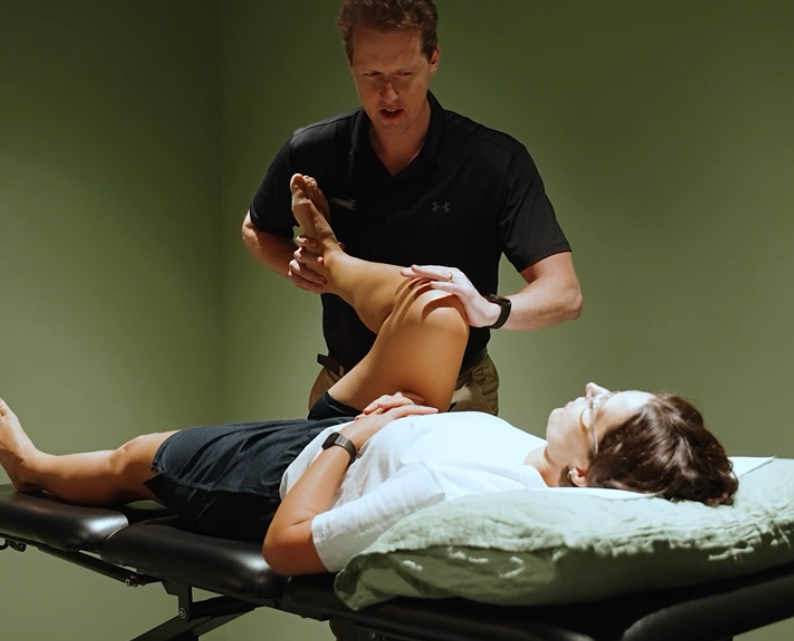
Suffering from Kneecap Pain in Sydney?
If you’re experiencing pain in the front of the knee, aching when sitting for long periods, discomfort walking downhill or descending stairs, or sharp twinges during a run… there’s a good chance you’re dealing with Patellofemoral Pain Syndrome (PFPS), commonly referred to as Runner’s Knee.
At City Physio & Pilates in Sydney CBD, kneecap pain is one of the most frequent knee issues we treat. Often caused by maltracking of the patella (kneecap), PFPS can feel like a deep ache or irritation behind or around the kneecap. It typically worsens with running, hiking, squats, or long stretches of sitting at your desk—earning it nicknames like Runner’s Knee or even Desk Knee.
Who Gets Patellofemoral Pain?
Runner’s Knee is common in active individuals—especially runners, cyclists, powerlifters, and long-distance walkers (we see a lot of Oxfam Trail Walker participants!)—as well as desk-based professionals with hip or core weakness. It tends to occur more frequently in active women, or in people who have recently ramped up their training volume without enough stability work to support it.
The underlying cause? Usually a biomechanical imbalance.
What Causes Kneecap Maltracking?
In a healthy knee, the patella glides smoothly along a groove in the femur. But when there’s muscle imbalance, glute weakness, or poor hip-knee-foot alignment, the kneecap can be pulled slightly off-track. This “maltracking” creates uneven pressure and friction, leading to inflammation of both the patella and the cartilage underneath it.
Over time, the result is pain, swelling, and a loss of confidence in your movement—especially downhill or under load.
Our 3-Phase Rehab Approach to Runner’s Knee
At City Physio & Pilates, we approach Runner’s Knee treatment in Sydney with a clear 3-phase plan:
Phase 1: Settle the Pain
We begin with strategies to unload the knee, reduce inflammation and calm things down. This may involve:
-
Taping techniques
-
Foam rolling and myofascial release
-
Manual therapy
-
Modifying your activity or training load
Phase 2: Find the Cause
Next, we conduct a detailed biomechanical assessment—looking at how your hips, pelvis, knees and feet are working (or not working!) together. We’ll identify which muscles are underactive (e.g. glutes, VMO) and which are doing too much. Then we target those deficits with:
-
Targeted strength training
-
Pilates-based stability work
-
Movement retraining
Phase 3: Return to Sport (and Stay There)
Finally, we help you reintroduce your chosen activity with a focus on prevention. This could mean:
-
Adjusting bike fit or toe angle
-
Adding warm-up drills
-
Balancing your running or gym program with stability and glute activation
Physiotherapy for Runner’s Knee and Jumper’s Knee in Sydney CBD
At City Physio & Pilates in Sydney CBD, we treat a wide range of knee injuries, with a particular focus on two of the most common complaints in active individuals: Runner’s Knee (Patellofemoral Pain Syndrome) and Jumper’s Knee (Patellar Tendinopathy). These conditions are highly prevalent among runners, athletes, and office workers alike and often require tailored, biomechanical rehabilitation for long-term relief.
What is Runner’s Knee?
Runner’s Knee, medically known as Patellofemoral Pain Syndrome, is characterised by pain around or behind the kneecap. This pain often worsens during or after activities like running, squatting, using stairs (especially going down), or even sitting for long periods. It’s one of the most common reasons people seek knee physiotherapy in Sydney.
Common Symptoms of Runner’s Knee:
-
Pain at the front of the knee
-
Clicking or grinding under the patella
-
Pain with prolonged sitting or descending stairs
-
Night-time knee aches
-
Swelling or a feeling of instability
- Knee pain during or after running
What Causes Runner’s Knee?
Runner’s Knee is often caused by poor patellar tracking—where the kneecap doesn’t glide smoothly through the femoral groove. This can be due to:
-
Muscle imbalances (especially weak glutes, VMO, and core)
-
Tightness in the ITB, quads or calves
-
Poor lower limb biomechanics
-
Overuse or rapid increase in training load
-
Inadequate running technique or footwear
Physiotherapy Treatment for Runner’s Knee
Our physiotherapists use evidence-based interventions to address both symptoms and root causes:
-
Biomechanical assessment of your hip, knee, ankle and foot
-
Strengthening exercises for glutes, quadriceps, hamstrings and core
-
Foam rolling and soft tissue release
-
Patella mobilisation and taping techniques
-
Gait and running analysis
-
Postural and technique correction
-
Load management and return-to-run planning
With a strong emphasis on functional rehab and movement retraining, our physiotherapists help you reduce pain, restore balance and get back to running—safely and efficiently.
Jumper’s Knee (Patellar Tendinopathy)
Jumper’s Knee, also known as patellar tendinitis or patellar tendinopathy, refers to inflammation and degeneration of the tendon that connects the kneecap to the shinbone. This condition is particularly common in sports that involve repeated jumping and rapid deceleration, such as basketball, volleyball, and netball.
Symptoms of Jumper’s Knee:
-
Localised pain at the base of the kneecap
-
Swelling in the tendon area
-
Stiffness during or after activity
-
Pain with jumping, landing, walking or stairs
-
Discomfort when squatting or kneeling
What Causes Jumper’s Knee?
Jumper’s Knee develops due to repetitive load through the patellar tendon. This overuse without adequate tendon recovery results in microscopic damage and a degenerative response rather than an inflammatory one.
Risk factors include:
-
High training volume with poor recovery
-
Sudden changes in training load
-
Weak or underactive glute and quad muscles
-
Biomechanical imbalances
-
Inadequate warm-ups or recovery strategies
Physiotherapy for Jumper’s Knee in Sydney CBD
At City Physio & Pilates, we follow a structured 3-phase rehab plan for treating patellar tendinopathy:
Phase 1: Pain Reduction and Load Management
-
Modification of jumping and impact activities
-
Soft tissue therapy and foam rolling
-
Patellar tendon taping for pain relief
-
Temporary cross-training (e.g., swimming or cycling)
- Pain management
Phase 2: Biomechanical Correction and Strength Training
-
Detailed biomechanical assessment of hip-knee-ankle alignment
-
Strengthening of VMO, glutes, and hamstrings
-
Controlled eccentric loading of the patellar tendon (e.g., decline squats)
-
Core and pelvic stability retraining
Phase 3: Return to Sport and Injury Prevention
-
Sports-specific drills and plyometrics
-
Running mechanics and jump landing control
-
Long-term tendon load management plan
-
Tailored home exercise program to prevent recurrence
Our team of experienced physiotherapists ensures that your rehab is safe, progressive and sport-specific.
Why Choose City Physio & Pilates for Knee Pain?
Whether you’re an athlete, a weekend warrior or dealing with work-related postural issues, City Physio & Pilates in Martin Place offers expert physiotherapy for knee pain, combining:
-
1-on-1 assessments
-
Manual therapy
-
Functional rehabilitation
-
Pilates-based strengthening
-
Sports taping and dry needling
-
Gait and running analysis
We treat the full kinetic chain—from the low back and hips down to the foot and ankle—to resolve the root cause of your symptoms.
Book Your Knee Assessment Today
If you’re experiencing persistent knee pain from running or jumping, don’t wait for it to worsen. Book a comprehensive knee physiotherapy assessment with our expert team in the heart of the Sydney CBD. Whether it’s Runner’s Knee, Jumper’s Knee, or general patellofemoral dysfunction, we can create a personalised plan to get you back to moving well and pain-free.