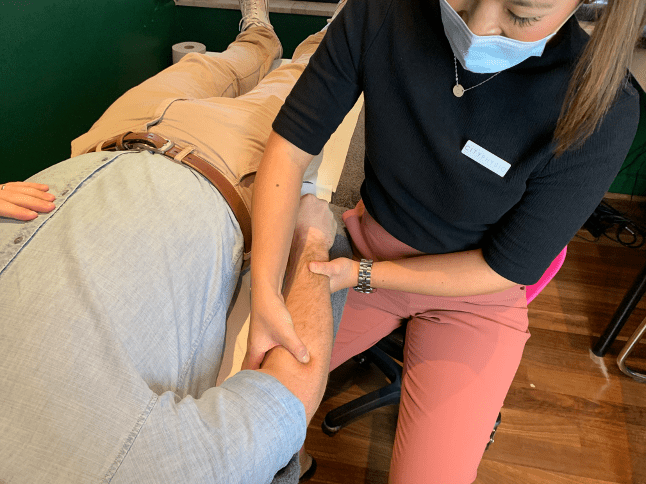
Rethinking Workers’ Compensation: The Case for Early, Evidence-Based Physiotherapy
Workers’ compensation claims don’t just affect the injured individual—they ripple through the entire workplace. From rising premiums to lost productivity and declining morale, the indirect costs of poorly managed injuries often go unnoticed, yet they are among the most preventable.
At WorkWell Health, part of the City Physio & Pilates group, we believe it’s time to disrupt how workplace injuries are handled. With a focus on early, transparent, and evidence-based physiotherapy, our goal is to reduce downtime, accelerate recovery, and support both workers and employers through a smarter, more human process.
The Hidden Cost of Workplace Injuries
According to McKinsey & Company, the average cost of absenteeism due to health issues can reach up to $3,600 per year per hourly worker and $2,650 per salaried employee. But when a worker suffers an injury that progresses into a compensation claim, those figures multiply quickly.
Chronic issues like low back pain, one of the most common workplace injuries, are particularly costly. A 2023 report by Safe Work Australia estimated that musculoskeletal injuries, including back pain, cost the Australian economy over $24 billion annually in healthcare, productivity loss, and compensation.
Even one unresolved claim can influence:
- Insurance premiums, increasing long-term business costs
- Team morale, especially when peers perceive the system as slow or unfair
- Presenteeism, where employees show up but aren’t functioning at capacity due to stress or fear of injury
A Better Way: Fast, Functional Care
Too often, workers compensation cases become drawn-out, bureaucratic, and disconnected from actual recovery. WorkWell Health changes that by bringing frontline, evidence-based physiotherapy directly into the process from day one. We apply a risk matrix, open clear and transparent communication pathways and dont fob off compensation patients to underprepared new grads.
Our approach focuses on:
- Early intervention: Engaging physiotherapy within 24–72 hours of injury helps avoid chronicity and improves return-to-work outcomes.
- Clear communication: Workers, employers, and insurers are kept informed with progress updates and realistic timelines.
- Risk stratification: We assess the prognostic risk and engage other health professionals sooner in a claim to improve outcomes, decrease sick days and return a worker sustainability to work
- Goal-oriented rehab: We apply proven frameworks that build capacity—not just treat pain—helping workers get back to meaningful duties sooner.
By shifting focus from managing pain to restoring function, we help resolve injuries before they derail careers or team dynamics.
Everyone Wins With a Smarter System
What sets WorkWell Health apart isn’t just our clinical excellence—it’s our commitment to removing complexity. We provide:
- On-site or in-clinic treatment options across Sydney’s CBD
- Digital case tracking and reporting for employers and insurers
- A human-first approach that prioritises confidence and trust for injured workers
- Centralised communication and billing, minimising unnecessary emails and faff
By partnering with employers who are ready to innovate, we’re proving that workplace injury care can be faster, fairer, and more effective for all stakeholders.
______________________________
Revolutionising Workers Compensation: What Sports Medicine Can Teach Us About Injury Management
In elite sport, risk is part of the job. Athletes push their limits daily, but what separates them from long-term injury is the precision of how injuries are monitored, triaged, and managed.
So why can’t we apply the same systems to the workplace?
At WorkWell, we believe the gap between sports and workplace injury management is artificial. By combining risk stratification, evidence-based protocols, and measurable KPIs, we’re modernising the way workers compensation claims are handled. And it starts with changing how injuries are assessed and acted upon, immediately.
Early Action Prevents Chronic Problems
One of the greatest predictors of a poor long-term outcome after injury isn’t the injury itself—it’s the delay in treatment. Acute injuries, when managed quickly with clear functional goals and appropriate intervention, rarely become chronic.
Yet in traditional workers compensation frameworks, delays are frequent. Layers of approvals, stakeholder involvement, and confusion about roles often lead to passive treatment, increased pain, and loss of work identity. They get palmed off to the new grad physio who is quickly overwhelmed. It’s a recipe for chronicity.
Our approach is different: we identify risk early, intervene fast, and track outcomes. Using a similar model to professional sport, we measure:
- Pain and function scores at baseline and intervals
- Psychological risk factors
- Number of sick days
- Standardised objective measures specific to injury
These markers help us stratify the risk of chronicity and tailor treatment before problems compound.
Experience at the Crossroads of Sport and Pain Science
What makes WorkWell Health truly innovative is the blend of expertise at its core.
Nicola, with a Master’s in Pain Management, understands the nuanced psychosocial drivers of pain. She brings a modern, person-centred lens to recovery that recognises when pain is more than just physical.
Matt, with a Master’s in Sports Medicine, has deep knowledge of protocols used in elite teams—data-led rehab, progression benchmarks, and outcome-driven treatment.
Together, Nicola and Matt have created a model that pulls the best of both worlds:
- From sports: precision, pace, and metrics
- From pain science: context, communication, and trust
This fusion ensures injured workers get the right care at the right time—not when paperwork allows. And helps unburden the workplace by empowering with data, identifying risks and consulting on solutions. What if workers compensation could be more than just a burden?
Complexity Isn’t Helping
In today’s claims process, injured workers are often surrounded by a crowd: rehab consultants, vocational advisors, case managers, IMEs, and more. While well-meaning, this often results in:
- Conflicting advice
- Duplicated assessments
- Disengaged patients
- $$$$$$$$$
The more complex the system, the more likely the patient is to fall through the cracks. The more providers involved the more reports there are. The more reports that are requested the more expensive it is. Is the physio just supposed to do reports these days?
At WorkWell Health, we believe in streamlining.
Our model strips away noise and puts a trusted physiotherapy-led team at the centre of care. We provide transparent, real-time updates to stakeholders so no one is left guessing.
A No-Risk Introduction to Better Care
We understand change comes with hesitation. That’s why we’ve built a cost-free, no-risk tier for businesses to trial our approach. Employers and insurers can experience the difference in communication, outcomes, and engagement before making any commitments.
We’re not just treating injuries. We’re changing the system.
Ready to see how? Connect with us to explore the smarter way to manage workplace injuries—one that’s fast, transparent, and designed with the person in mind.