By the City Physio team
Short answer. The sacroiliac joint transfers load between the spine and pelvis. When it isn’t doing that well, it can cause one-sided low back and buttock pain that’s worse on stairs, on one leg and rolling in bed. It’s often missed because it isn’t examined, so a thorough assessment includes the SIJ as well as the lower back and hip.
You’ve had one-sided low back pain for three months. You’ve done the McKenzie exercises, leaning back again and again. You’ve done the hip mobility routine from Instagram. You’ve bought a standing desk. The pain is still there: same side, same spot, same pattern. Getting dressed is awkward. Standing on one leg to put your shoe on is hard. Some days are inexplicably worse than others, and stairs feel uneven in a way you can’t quite describe.
There’s a reasonable chance nobody has properly assessed your sacroiliac joint.
What the SIJ is, and why it matters
The sacroiliac joint (SIJ) sits at the base of the spine, where the sacrum (the triangular bone at the bottom of the spine) meets the ilium on each side of the pelvis. You have two, and they move very little. That’s by design.
The SIJ isn’t built for mobility. It’s built for load transfer. Every time you walk, run, climb stairs or shift your weight, force travels from the spine through the sacrum, across the SIJ and into the pelvis and legs. The joint needs to be stable enough to do that without shearing, while still allowing the small movements of normal walking.
That stability comes from two things:
- Form closure: the shape of the joint itself. The sacrum is wedged between the two pelvic bones, and the rough, interlocking joint surfaces resist sliding under load, like two rough stones pressed together.
- Force closure: the muscles. The deep multifidus, pelvic floor, transversus abdominis, gluteus maximus and hamstrings press across the joint and add to that bony locking.
Here’s where it gets interesting. If the joint starts moving in ways it shouldn’t, even slightly, the timing of the muscles controlling it may go off. Muscles that should switch on before load arrives start reacting after it. The system compensates, and the compensation can spread up into the lower back and down into the hip. That’s why SIJ problems rarely look like simple pain over one joint. They look like a pattern.
What SIJ pain can look like
One-sided low back pain, usually just below and inside the bony point at the back of the pelvis (the “dimple”). It may spread into the buttock, the back of the thigh and sometimes the groin, and less often below the knee.
People commonly notice:
- discomfort getting out of the car
- stairs feeling uneven
- pain standing on the affected leg, such as putting on shoes or stepping into pants
- a sharp pain rolling over in bed
- problems with single-leg loading in sport
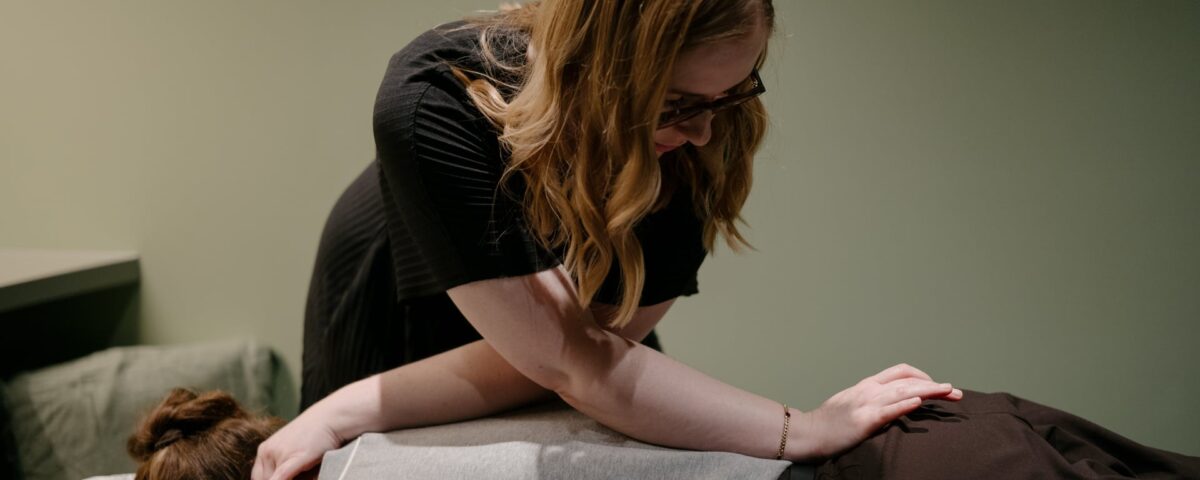
The clinical signs are there when you look for them. A group of pain provocation tests (distraction, compression, thigh thrust, sacral thrust and others), when several are positive, is reasonably accurate for SIJ involvement. Movement testing of the pelvis, the active straight leg raise, and feeling for tenderness over the long ligament at the back of the joint all add to the picture. None of it is complicated. It needs good hands, an organised assessment and the conviction to include it.
Why it gets missed
We often see SIJ problems in people coming for a second opinion on low back pain that hasn’t settled after months of treatment elsewhere.
Part of the problem is that low back pain care has become heavily influenced by a movement-first, often social-media-driven model that leans on mobility drills, breathing and pelvic tilts over clinical examination. Movement approaches have value. They have less value when they’re applied without a diagnosis. The right exercise aimed at the wrong structure is still the wrong treatment.
A thorough low back assessment includes the lower back, the hip, a neurological screen and the SIJ, as routine, from the start. Telling SIJ pain apart from pain referred from the lower back isn’t always straightforward, and the two can coexist, which is why the examination needs to be specific.
When back pain keeps coming back
Low back pain that keeps recurring is worth taking seriously. When the same pattern returns months later, a useful question is not just “what do we do this time?” but “what might have been missed last time?”. For some people, the answer is the pelvis.
How we approach it
We look at the pelvis as a whole: the SIJ, the lower back, the hip and the deep muscles around all three, because they work together. Stabilising the SIJ without the muscle system around it tends to be incomplete, and so does rehab of the deep muscles without addressing how the joint is moving.
Elizabeth is certified in the Integrated Systems Model (ISM), as taught by Diane Lee, a way of assessing the whole body to find what might be driving pain that keeps coming back. More on back pain.
Related pages
Common questions
What is SIJ dysfunction?
A problem with how the sacroiliac joint, where the base of the spine meets the pelvis, transfers load. It typically causes one-sided low back and buttock pain, often worse with single-leg activities, stairs and rolling over in bed.
How is SIJ pain diagnosed?
Through a clinical examination that includes a group of pain provocation tests, movement testing of the pelvis and ruling out the lower back and hip. Several positive provocation tests together point towards the SIJ.
Why does my back pain keep coming back?
There can be several reasons. Sometimes part of the picture, such as the pelvis, hasn’t been identified or addressed. A thorough reassessment, or a second opinion, can help find what’s driving it.
Sources
Laslett M et al. Diagnosis of sacroiliac joint pain: validity of individual provocation tests and composites of tests. Manual Therapy 2005;10(3):207-218.
Lee D. The Pelvic Girdle: An Integration of Clinical Expertise and Research, 4th edition. Churchill Livingstone, 2011.
Want someone to look at it?
Book online or call 9223 1575.
City Physio & Pilates, Shop 10, Level 6, 25 Martin Place, Sydney NSW 2000
Monday to Thursday 7am to 6pm. Friday 8am to 5:30pm.
Search the blog
General information only. It isn’t a substitute for an assessment.