By the City Physio team
Short answer. Groin pain can come from the hip joint, the muscles and tendons around the groin, or be referred from the lower back or sacroiliac joint. Where it hurts isn’t always where the problem is, so the assessment checks all of them before treatment is planned.
Groin pain is something we treat regularly, and it’s commonly misunderstood. Whether it’s soreness, a sharp pain, or a nagging ache that’s worse with activity or long periods sitting, the groin needs a careful assessment, because the place it hurts isn’t always the place the problem is.
Groin pain can come from muscles, tendons, joints, or be referred from the lower back, hip or sacroiliac joint (SIJ). Getting the source right is what the treatment depends on. For the full overview, see our groin pain page.
Common causes
1. The hip joint
- Hip impingement (FAI), where the shape of the bones in the hip can irritate tissues as it moves
- Labral tears, injuries to the cartilage rim of the hip socket
- Hip osteoarthritis, which often causes a deep ache in the groin or front of the hip
2. Muscles and tendons
- adductor strain or tendinopathy, often from sport, kicking or sudden changes of direction
- iliopsoas (hip flexor) problems, with pain at the front of the hip or groin, often worse lifting the leg or sitting for long periods
- lower abdominal strains, especially with twisting or heavy core work
3. Referred from the lower back or SIJ
- lower back problems, including disc bulges, can refer pain into the groin
- SIJ problems can cause a deep groin ache, especially with sitting, walking or getting out of a car, and sometimes gripping at the front of the hip that feels like a hip or groin problem, but isn’t
Sometimes more than one of these is involved at once, which is where careful clinical reasoning matters.
The muscles involved
- Adductors (longus, brevis, magnus and gracilis): bring the legs together
- Iliopsoas: a deep hip flexor, important for walking and posture
- Rectus femoris: the quadriceps muscle that also crosses the hip
- Abdominals: particularly the lower fibres of rectus abdominis and the obliques
These can be overloaded by a sudden jump in training, how you move, or poor control through the trunk and pelvis. We look at why the area became painful, not just what hurts.
Assessment
- a detailed history: how it started, what it feels like, what makes it worse, your sport and exercise, pregnancy and childbirth, hypermobility, family history and general health
- movement testing to see how much load the area tolerates, and any imbalances
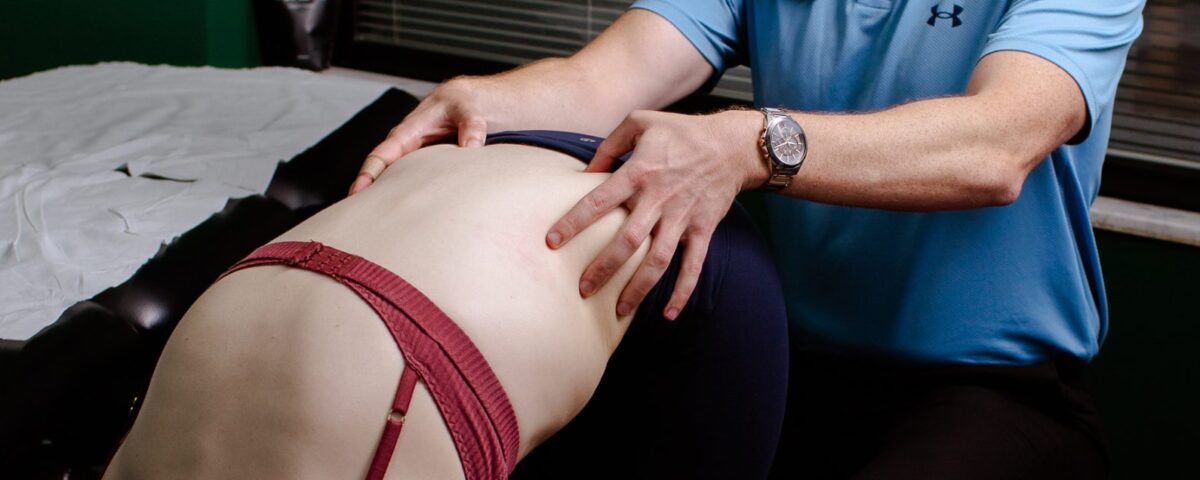
- specific tests for the hip joint, SIJ, lower back and soft tissues
- pelvic control and trunk strength
The aim is to tell apart a tendon problem, pain referred from a joint, and nerve involvement, because each is treated differently.
Treatment
- manual therapy for stiff joints or tight muscles
- soft tissue work and dry needling
- targeted strengthening of the adductors, glutes, hip flexors and trunk
- load management and a planned return to sport
- clear explanation, so you understand what’s going on and what to change
If Pilates suits you as a next step, your physio can hand you over to our Pilates instructors with notes. If imaging or a specialist opinion is needed, we’ll work with your GP. Christie and Matt see a lot of groin and hip problems.
Related pages
Common questions
What causes groin pain?
It can come from the hip joint, the adductor or hip flexor muscles and tendons, the lower abdominals, or be referred from the lower back or SIJ. Sometimes more than one is involved.
Could my groin pain be coming from my back?
It could. The lower back and the sacroiliac joint can both refer pain into the groin, which is why we check them as well as the groin and hip.
Want someone to look at it?
Book online or call 9223 1575.
City Physio & Pilates, Shop 10, Level 6, 25 Martin Place, Sydney NSW 2000
Monday to Thursday 7am to 6pm. Friday 8am to 5:30pm.
Search the blog
General information only. It isn’t a substitute for an assessment.