


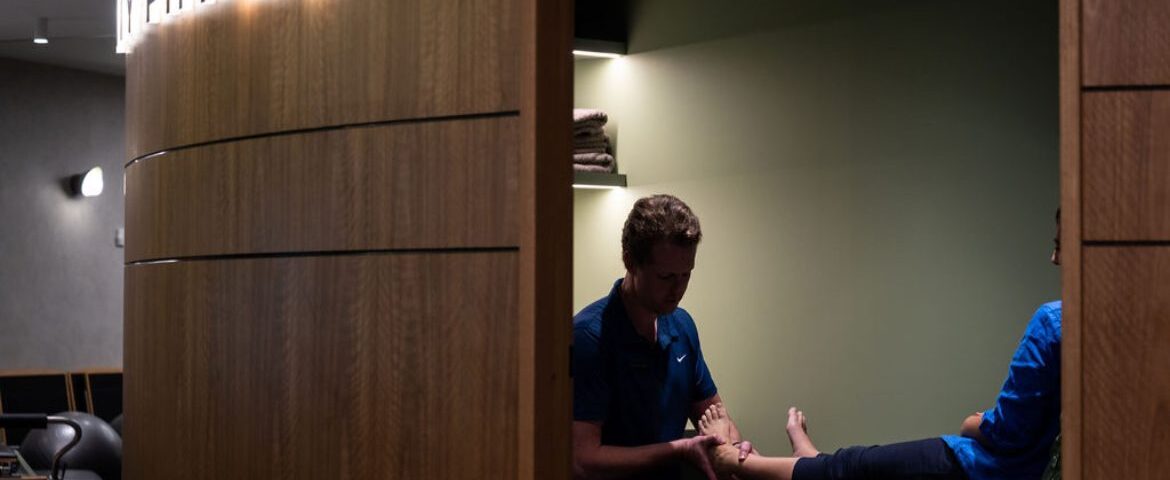
By the City Physio team
Short answer. Back and pelvic pain are very common in pregnancy, but they aren’t one thing. Lower back pain, pelvic girdle pain, sciatic-type pain and round ligament pain have different causes and different treatment. Physio and the right exercise may help, and we work alongside your midwife, doctor and pelvic health physio.
Back and pelvic pain are very common in pregnancy. Common doesn’t mean you have to just push through it.
The part nobody tells you
Back pain is one of the things we treat most at Martin Place, and pregnancy-related back pain is one of the most undertreated. Too many women are told it’s “just part of pregnancy”, handed a heat pack and sent on their way. That’s not good enough.
In our experience, pregnant patients are sometimes treated too gently and not specifically enough, as if a pregnant body is too fragile to work with. We don’t treat you like you’re made of glass. We meet you exactly where you’re at: no fluff, careful and specific treatment, always.
“Pregnancy back pain” also isn’t one thing. It’s several different problems with different causes and different treatment, so getting the diagnosis right is where it starts.
Four common types
1. Lower back (lumbar) pain
As your centre of gravity moves forward, the curve in your lower back tends to increase, and the deep abdominal muscles are stretched around the growing uterus, so they’re less able to share the load. That may increase load through the lower back. It often feels like an aching across the low back that builds with sitting or standing still and eases as you move.
How we might treat it: assessment of how your lower back is moving, hands-on treatment, and tailored exercise to keep you strong and moving. This isn’t about bed rest.
2. Pelvic girdle pain (PGP)
Pelvic girdle pain is the one most often mislabelled as general back pain. It involves the sacroiliac joints at the back of the pelvis and the pubic joint at the front. Hormonal changes in pregnancy loosen the ligaments of the pelvis (a necessary change for birth), and without enough muscular support the joints may struggle to manage load. It often hurts with walking, stairs, standing on one leg, getting out of a car, and turning over in bed, which is a classic and underappreciated one.
How we might treat it: load management, strengthening of the glutes and hips, manual therapy techniques suited to pregnancy, and practical advice on positions and movements. We don’t use aggressive mobilisation of the sacroiliac joints in pregnancy, but we don’t tiptoe around you either. Getting that balance right comes from clinical experience.
3. Sciatic-type pain
True disc-related sciatica is relatively uncommon in pregnancy. Pain into the buttock and back of the thigh is more often driven by the deep buttock muscles, the pelvis, or a sensitised nerve. Telling these apart matters, because the treatment is different. We may use gentle nerve mobility work alongside hip and glute strengthening. See also back pain.
4. Round ligament pain
The round ligaments run from the uterus to the groin and come under more tension as the uterus grows. They tend to give a sharp, pulling pain low in the abdomen or groin with sudden movements, like coughing, sneezing or standing up quickly. It’s often mistaken for pelvic girdle pain, and the management is different. Any persistent or worsening abdominal pain in pregnancy needs checking by your doctor or midwife.
Exercise during pregnancy
Staying active is one of the better-supported ways of managing back and pelvic pain in pregnancy. The key word is appropriate: your trimester, your symptoms and your own capacity all matter, and this isn’t the time for generic online workouts. We typically focus on trunk control and breathing, glute and hip strength, everyday strength like getting up from a chair, and keeping the upper back moving. Some exercises might be modified depending on how you’re presenting, and we’ll guide you specifically rather than hand you a list of things you can never do.
After the birth
Pregnancy-related back and pelvic pain doesn’t always settle after delivery, and many women come to us months later with symptoms that were never properly rehabilitated. We don’t do pelvic floor assessments: your pelvic health physio looks after that, and we work closely with them. Alongside their care, we can help with back and pelvic pain, abdominal muscle separation through physio and then Pilates, and getting back to lifting a pram, desk work, the gym or running and sport.
Who you’ll see
Christie Whitehead has a particular interest in pregnancy-related pain and in getting people back to exercise before and after a baby. If Pilates is the right next step, your physio hands you over to our Pilates instructors with notes. Classes are run by our instructors, not physios.
Contact your doctor or midwife straight away if
- you have vaginal bleeding or a leak of fluid
- you have severe abdominal pain, or pain that comes and goes like contractions
- you have a fever, or pain or swelling in one leg
- you have numbness or weakness in your legs, or trouble controlling your bladder or bowels: call 000
- the pain followed a fall or injury
Related pages
Common questions
Is physio safe during pregnancy?
Physio can be adapted for every stage of pregnancy. We choose techniques and positions to suit you, and if anything needs your doctor or midwife first, we’ll tell you.
Do you do pelvic floor assessments?
No. We work closely with women’s health and pelvic health physios, who look after pelvic floor assessment.
Can I keep exercising with pregnancy back pain?
Often, with the right exercise for you. Your trimester, symptoms and capacity all matter, so it’s worth getting advice specific to you.
Sources
Liddle SD, Pennick V. Interventions for preventing and treating low-back and pelvic pain during pregnancy. Cochrane Database of Systematic Reviews 2015;(9):CD001139.
Pregnancy, Birth and Baby (Healthdirect): Backache in pregnancy and Pelvic girdle pain in pregnancy. Healthdirect: Warning signs during pregnancy.
Want someone to look at it?
Book online or call 9223 1575.
City Physio & Pilates, Shop 10, Level 6, 25 Martin Place, Sydney NSW 2000
Monday to Thursday 7am to 6pm. Friday 8am to 5:30pm.
Search the blog
General information only. It isn’t a substitute for an assessment.
