By the City Physio team
Short answer. Overtraining happens when hard training isn’t matched by enough recovery: performance drops, fatigue builds and injury risk climbs. Building load gradually, taking recovery seriously, training with a plan and fuelling properly are the main ways to avoid it.
You’re training hard. You’re consistent. So why are you getting slower, grumpier, and catching every cold that goes round the office?
You might be overtraining, and it’s more common than most athletes like to admit.
What overtraining is
Overtraining happens when the body is repeatedly pushed through hard training without enough recovery. Instead of adapting and improving, performance drops, fatigue builds and injury risk climbs.
Good training relies on progressive overload: gradually increasing volume, frequency, intensity or duration so the body adapts. Done well, that’s how you get fitter and stronger. Done without enough recovery, fatigue piles up faster than the body can absorb it, and feeling a bit flat can slowly turn into something that sidelines you.
Signs you might be overtraining
- performance dropping despite consistent training
- tiredness that a good night’s sleep doesn’t fix
- irritability, low motivation, or feeling flat
- trouble getting to sleep or staying asleep, or waking unrefreshed
- a resting heart rate that’s higher than usual
- getting sick more often
- losing enthusiasm for training
Several of these can also have medical causes, so if they’re persistent, see your GP as well.
Prevention beats recovery
1. Build load gradually
A popular rule of thumb is not to increase total training load by more than about 10% a week. Treat it as a rough guide rather than a law. Progressive overload has four levers (volume, duration, frequency and intensity), and pulling all four at once is a reliable way to end up injured or overtrained. Change one or two at a time.
Runners: don’t overlook shoes. A new shoe can change how load travels up the leg, so build into new footwear gradually, especially with a different heel drop or cushioning.
2. Take recovery seriously
Recovery is where adaptation happens. Rotate what you’re stressing so something is recovering while something else works. Rest days and easier weeks are some of the most underused tools around.
3. Train with a plan
In our experience, the people who come in overtrained often had no structured plan: they trained on feel and didn’t notice the load creeping up. A plan doesn’t need to be complex. An app or a simple spreadsheet works, as long as you can see your load over weeks and months. Build in flexibility, because life adds stress and disrupts sleep too.
4. Fuel the work
Training without enough fuel is like running a car on an empty tank and wondering why it’s struggling. If intake doesn’t match training, recovery suffers. Not eating enough for your training over time is linked with a condition sports medicine calls Relative Energy Deficiency in Sport (RED-S), which can affect bone health, hormones and performance. A sports dietitian can help.
When to see a physio
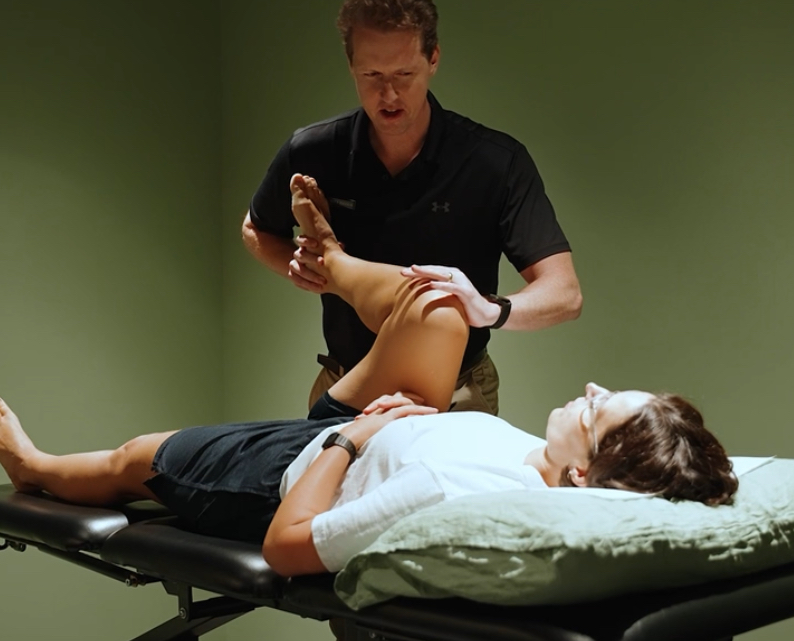
If you recognised yourself in this, it’s worth acting now, not after another three weeks of pushing through. We can look at your training load, what’s contributing, and a plan to get you back and keep you there. Christie sees a lot of overtraining in runners and triathletes. More on running physio and sports injuries.
Related pages
Common questions
What are the signs of overtraining?
Performance dropping despite consistent training, ongoing tiredness, mood changes, poor sleep, a higher resting heart rate and getting sick more often are common signs.
How do I avoid overtraining?
Build load gradually, take recovery seriously, train with a plan so you can see your load, and eat enough to match your training.
Sources
Mountjoy M et al. 2023 International Olympic Committee consensus statement on Relative Energy Deficiency in Sport (REDs). British Journal of Sports Medicine 2023;57(17):1073-1097.
Want someone to look at it?
Book online or call 9223 1575.
City Physio & Pilates, Shop 10, Level 6, 25 Martin Place, Sydney NSW 2000
Monday to Thursday 7am to 6pm. Friday 8am to 5:30pm.
Search the blog
General information only. It isn’t a substitute for an assessment.