
City Physio & Pilates | Expert Insights | Headache & Neck Pain
Why Getting Your Headache Diagnosis Right Changes Everything
The ICHD-3 Classification System — and Why Your Sydney CBD Physiotherapist Should Know It Cold
Headache is one of the most common complaints in the world — and one of the most commonly mismanaged. If you’ve been told you have migraines but the medication isn’t working, or if you’ve been living on over-the-counter painkillers for months without lasting relief, there is a very good chance the root cause has never been properly identified.
At City Physio & Pilates in Martin Place, Sydney CBD, we’ve been treating headache patients for over 40 years. In that time, one pattern stands out above all others: the single biggest barrier to getting better is an incorrect diagnosis. Treating the wrong headache type doesn’t just fail — it can actively make things worse.
This article explains why precise diagnosis matters, how the gold-standard international classification system works, and what that means for your treatment.
What Is the ICHD-3, and Why Should You Care?
The International Classification of Headache Disorders, Third Edition (ICHD-3), published by the International Headache Society, is the global clinical benchmark for headache diagnosis. Think of it as the diagnostic bible — a detailed framework of over 200 headache subtypes, each with its own strict diagnostic criteria.
Why does this matter to you as a patient? Because “headache” is not a diagnosis — it is a symptom. The headache you experience on a Tuesday afternoon at your Martin Place desk may be an entirely different condition from the one that woke you at 3am — even if they feel similar on the surface. Lumping all headaches together is like treating all chest pain with the same medication. The mechanism is different, so the treatment must be different.
The three headache types most commonly seen — and misdiagnosed — in a physiotherapy setting are: tension-type headache (TTH), migraine, and cervicogenic headache (CGH). Each has a distinct pathophysiology, a distinct clinical presentation, and a distinct evidence-based treatment pathway.
The Three Primary Headache Types — What They Are, and How to Tell Them Apart
1. Tension-Type Headache (TTH)
Tension-type headache is the most prevalent headache disorder in the general population, affecting up to 78% of people at some point in their lives. Despite its name, it is not simply caused by “being tense” — the pathophysiology involves both peripheral and central sensitisation of pain pathways, including heightened sensitivity in the pericranial myofascial tissues (the muscles and connective tissue surrounding the skull).
ICHD-3 diagnostic criteria for tension-type headache include:
- Bilateral (both sides of the head) pressing or tightening quality — often described as a band or vice around the head
- Mild to moderate pain intensity
- Not aggravated by routine physical activity such as walking or climbing stairs
- No nausea or vomiting (though mild photophobia or phonophobia may be present)
- Typically lasting 30 minutes to 7 days
The sleep connection most clinicians miss
There is a well-established bidirectional relationship between tension-type headache and sleep disturbance. Research consistently shows that poor sleep quality — particularly insufficient slow-wave (deep) and REM sleep — lowers the threshold for central sensitisation and increases pericranial muscle tenderness. In plain terms: if you’re not sleeping well, your brain becomes more sensitive to pain signals, and your neck and scalp muscles become more reactive.
This is why, at City Physio, a full headache assessment always includes questions about sleep quality, sleep hygiene, and sleep disorders such as obstructive sleep apnoea. A treatment plan that addresses only the musculoskeletal component without targeting sleep will deliver incomplete results. For many TTH sufferers, improving sleep is not a secondary consideration — it is a primary therapeutic target.
Other contributing factors common in Sydney CBD office workers include sustained screen postures, psychosocial stress, dehydration, and irregular meal patterns.
2. Migraine
Migraine is a complex, episodic neurological disorder — not simply a severe headache. It is classified by the ICHD-3 as a primary headache disorder with a distinct neurobiological mechanism involving cortical spreading depression, trigeminovascular activation, and altered brainstem pain modulation. It affects approximately 15% of the Australian population and is significantly underdiagnosed and undertreated.
ICHD-3 diagnostic criteria for migraine without aura require at least 5 attacks with the following features:
- Unilateral (one-sided) location — though it can occasionally present bilaterally
- Pulsating or throbbing quality
- Moderate to severe pain intensity
- Aggravated by, or causing avoidance of, routine physical activity
- During the headache: nausea and/or vomiting, OR sensitivity to both light (photophobia) and sound (phonophobia)
- Duration of 4 to 72 hours if untreated
Migraine with aura — affecting around one-third of migraine sufferers — involves additional transient neurological symptoms preceding the headache phase. These most commonly include visual disturbances such as scintillating scotomas (shimmering or flickering lights at the edge of vision), but may also involve sensory changes, speech disturbance, or motor symptoms.
The role of physiotherapy in migraine management
The physiotherapy role in migraine is often underappreciated. While migraine requires a coordinated medical approach — including appropriate prophylactic and acute pharmacotherapy — physiotherapy plays a meaningful adjunct role. Manual therapy directed at the upper cervical spine can reduce sensitisation of the trigemino-cervical complex: the anatomical zone where neck and trigeminal (facial and head) pain signals converge. Aerobic exercise prescription, stress management, and trigger identification also have strong evidence bases for migraine prevention.
At City Physio, we work collaboratively with neurologists and GPs to ensure migraine patients receive the full spectrum of evidence-based care — physiotherapy as part of a coordinated multidisciplinary plan, not in isolation.
3. Cervicogenic Headache (CGH)
Cervicogenic headache is the headache type most frequently seen at City Physio & Pilates — and paradoxically, the one most often mistaken for something else. It is a secondary headache disorder: the pain originates not in the brain, but in the bony and soft-tissue structures of the upper cervical spine, and is referred to the head.
The primary anatomical sources are the upper three cervical spinal levels (C0–C3), specifically:
- The atlanto-occipital joint (C0–C1)
- The atlanto-axial joint (C1–C2)
- The C2–C3 zygapophyseal (facet) joints
- The sub-occipital musculature and associated myofascial tissue
- The C2–C3 intervertebral disc and associated ligamentous structures
Pain from these structures is referred to the head via the trigemino-cervical nucleus — the same anatomical convergence zone involved in migraine. This is why cervicogenic headache is so commonly confused with migraine: the referral patterns can look similar, and both can produce unilateral head pain. However, the treatment is entirely different.
Key clinical features that distinguish cervicogenic headache:
- Unilateral head pain that does not shift sides between attacks
- Reproduction of usual headache with sustained neck postures or neck movement
- Restricted cervical range of motion
- Pain that begins in the neck or sub-occipital region and spreads forward to the head
- Relief with manual therapy directed at the upper cervical spine
- Often associated with a history of neck trauma, prolonged desk postures, or degenerative cervical spine changes
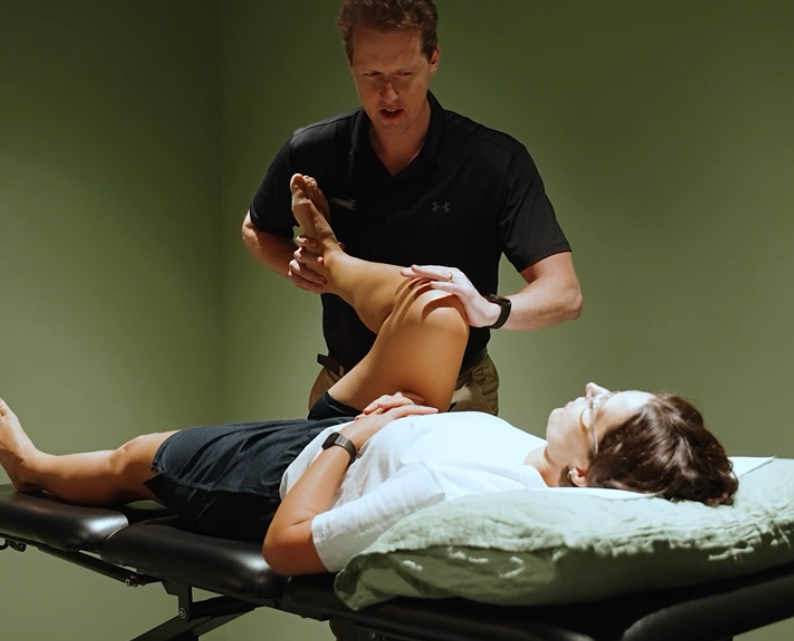
At City Physio, cervicogenic headache treatment is highly specific. It includes hands-on manual therapy to the affected cervical joints, deep cervical flexor muscle retraining (a specialised motor control program that most generic exercise approaches miss), postural correction, and workplace ergonomic assessment where indicated.
The landmark Jull et al. (2002) randomised controlled trial demonstrated that a combination of manual therapy and specific therapeutic exercise reduced cervicogenic headache frequency by over 50% at 12-month follow-up. This is the clinical standard we work to at City Physio.
Why Getting the Diagnosis Wrong Is Dangerous — The Medication Overuse Problem
This is the clinical issue that concerns us most: patients who have been incorrectly diagnosed spending months — or years — managing the wrong condition with escalating medication use.
Medication-overuse headache (MOH) — also called rebound headache — is a secondary headache disorder caused by the chronic overuse of acute headache medications. The ICHD-3 defines it as headache occurring on 15 or more days per month in a patient using acute medication on 10 or more days per month for more than 3 months.
In practical terms: if you are taking pain relief for headaches more than a couple of times per week and your headaches are becoming more frequent rather than less, you may have developed medication-overuse headache on top of your original condition.
We see this regularly at City Physio. It is almost always the result of one of the following:
- A cervicogenic headache being treated as migraine — leading to triptans or opioids that do nothing for the underlying joint dysfunction
- A tension-type headache being managed with daily NSAIDs or paracetamol, triggering the MOH cycle
- Migraine being undertreated, leading to escalating reliance on acute medication without prophylaxis
The consequences extend beyond more frequent headaches. The literature documents worsening of the underlying primary headache disorder, psychological impacts including anxiety and depression related to pain chronification, and significant barriers to recovery once the overuse cycle is established.
The solution is not simply to take less medication. It is to correctly identify what type of headache you have — and treat the actual cause.
What a Proper Headache Assessment Looks Like at City Physio
A first appointment for headache at City Physio is not a 15-minute consultation. It is a comprehensive clinical interview and physical examination — typically 45 to 60 minutes — designed to arrive at a precise, ICHD-3 compatible diagnosis before any treatment is planned.
The assessment includes:
- Detailed headache history: onset, frequency, duration, location, quality, severity, associated features (nausea, photophobia, phonophobia, aura), aggravating and relieving factors, and full medication history
- Sleep history and sleep quality screening
- Cervical spine physical examination: range of motion, segmental mobility testing of C0–C3, palpation of zygapophyseal joints and sub-occipital musculature, and neurological screening
- Deep cervical flexor assessment using the craniocervical flexion test (CCFT) — the gold-standard clinical measure of deep neck muscle function
- Postural and ergonomic assessment where relevant
- Identification of red flags requiring urgent medical referral — including sudden-onset (“thunderclap”) headache, fever, focal neurological signs, or progressive worsening
From this assessment, we establish a working diagnosis, explain it to you in plain language, and discuss an individualised treatment plan with realistic timeframes and goals. If your presentation suggests a condition outside physiotherapy scope, we will tell you clearly and refer you to the appropriate specialist.
Frequently Asked Questions: Headache Diagnosis & Physiotherapy in Sydney CBD
Can physiotherapy cure headaches? For cervicogenic headache, physiotherapy is the primary treatment — and outcomes are excellent with the right approach. For tension-type headache, addressing the musculoskeletal contributors alongside sleep and lifestyle factors typically produces significant reduction in frequency and severity. For migraine, physiotherapy is a valuable adjunct to medical management. The key in all cases is correct diagnosis first.
How do I know if my headaches are coming from my neck? The most reliable indicator is whether sustained neck postures or neck movements reproduce or worsen your headache. Other signs include neck stiffness alongside the headache, tenderness at the base of the skull, and pain that starts at the back of the head and spreads forward. A physiotherapy assessment can confirm or rule this out through specific clinical testing.
I’ve had migraines for years — could they actually be cervicogenic? Yes, and this is more common than most people realise. The referral patterns for upper cervical spine disorders can closely mimic migraine, including unilateral head pain, photophobia, and even nausea. Many patients diagnosed with migraine — particularly those who respond poorly to migraine medication — have an unrecognised cervicogenic component. A thorough assessment will differentiate between the two.
How many sessions will I need for headache treatment? For cervicogenic headache, most patients begin to notice improvement within 2 to 4 sessions, with a full course of 6 to 12 sessions typical for sustained results. Tension-type headache timelines vary depending on the contribution of sleep, stress, and lifestyle factors. We set realistic expectations at your first appointment and reassess regularly against objective markers.
Do I need a GP referral to see a physiotherapist for headaches in Sydney? No referral is needed to book at City Physio — you can self-refer directly. If you have private health insurance, you may be eligible for a rebate. If you have a Chronic Disease Management (CDM) plan from your GP, Medicare may also contribute to the cost of your sessions.
The City Physio Difference: Four Decades of Headache Expertise in Sydney CBD
City Physio & Pilates has been operating from Martin Place — the heart of Sydney’s CBD — for over 40 years. Our principal physiotherapist holds a Masters degree in Pain Management, giving our headache and facial pain assessments a depth of clinical reasoning that goes well beyond standard musculoskeletal physiotherapy.
We are one of a very small number of physiotherapy practices in Sydney with a specific focus on TMJ (temporomandibular joint) disorders and orofacial pain — conditions that frequently co-exist with cervicogenic and tension-type headaches, and that are commonly missed in a standard assessment.
We don’t treat headaches generically. We identify exactly what is causing your headache — using the same diagnostic standards the international headache research community uses — and then treat that, precisely and effectively.
Ready to find out what’s actually causing your headaches? Book a comprehensive headache assessment at City Physio & Pilates, Martin Place, Sydney CBD — or book online at cityphysio.com.au.