City Physio & Pilates | Expert Insights | Headache & Neck Pain
Your “Migraine” Might Actually Be Coming From Your Neck
Migraine vs cervicogenic headache… and why the distinction is everything when it comes to treatment.
You’ve had the same headache for years. You’ve tried the triptans, cut out the red wine, tracked your cycle, ditched the aged cheese. Sometimes it helps. Often it doesn’t. Your neurologist says migraine. Your GP says migraine. The internet says migraine.
But what if it isn’t?
A significant proportion of people diagnosed with migraine, or living with undiagnosed recurrent headaches, are actually experiencing cervicogenic headache: a headache that originates from structures in the neck, not the brain. Same symptoms. Very different source. And critically, a very different treatment approach.
What is a cervicogenic headache?
Cervicogenic headache is a referred pain phenomenon. The upper cervical spine – specifically the joints, muscles, and nerves from C1 to C3 – shares neural pathways with the trigeminal nerve, which is responsible for sensation across your face and head. When structures in the upper neck are irritated, compressed, or dysfunctional, the brain can interpret that pain as originating in the head itself.
In plain terms: your neck is in trouble, but your forehead gets the memo.
It is classified as a secondary headache by the International Headache Society – meaning it has an identifiable physical cause, as opposed to the primary headache disorders like migraine or tension-type headache, which are diagnoses of exclusion.
Migraine vs cervicogenic headache: how to tell them apart
There is genuine clinical overlap, which is why misdiagnosis is so common. Both can cause unilateral head pain, nausea, and sensitivity to light. But several features tend to differentiate them.
Signs that point toward cervicogenic headache
- Pain that starts at the base of the skull or upper neck before spreading forward
- Headache that worsens with sustained postures – particularly prolonged sitting, screen work, or looking down
- Restricted neck movement, or pain that is reproduced when you move or press on the neck
- A consistent pattern on one side of the head that doesn’t switch sides
- No aura, no throbbing quality, and little response to migraine-specific medications
- Pain that eases (even temporarily) with certain neck positions or manual pressure
Signs that point toward migraine
- Throbbing or pulsating quality
- Moderate to severe intensity that limits normal activity
- Nausea or vomiting
- Aura – visual disturbances, tingling, or speech changes preceding the headache
- Triggered by hormonal changes, specific foods, sleep disruption, or stress
- Responds to triptans or anti-inflammatories
Who gets cervicogenic headache?
The short answer: people who spend a lot of time in sustained, loaded postures. CBD professionals, surgeons, lawyers working through stacks of briefs, anyone who has normalised a seven-hour screen day with a phone wedged between ear and shoulder. The upper cervical spine was not designed for the modern desk.
It’s also common after motor vehicle accidents and other whiplash-type injuries, where the upper cervical joints sustain direct trauma.
What does physiotherapy treatment actually look like?
This is where cervicogenic headache becomes genuinely satisfying to treat. Unlike migraine, which requires a pharmaceutical management strategy, cervicogenic headache has clear mechanical targets — and a solid evidence base for manual therapy and exercise.
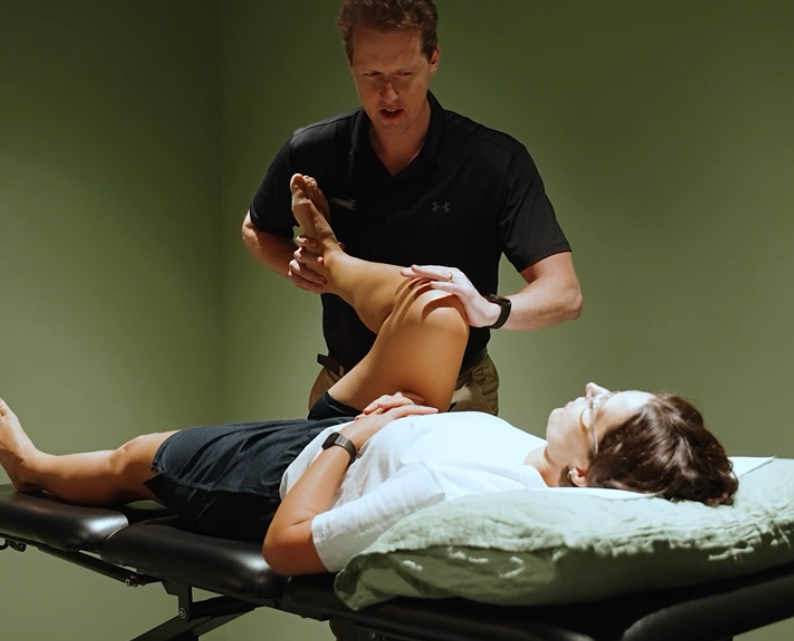
At City Physio & Pilates, assessment includes a detailed examination of the upper cervical spine, including joint mobility, muscle function, and neural sensitivity. If we can reproduce your headache by loading specific structures in your neck — and then reduce it — that’s diagnostic. That’s the neck talking.
Treatment typically involves a combination of:
- Specific manual therapy to the upper cervical joints (particularly C1-2 and C2-3)
- Deep neck flexor retraining – the small stabilising muscles of the upper cervical spine that tend to become inhibited in people with chronic neck pain and headache
- Postural correction and load management strategies for desk-based workers
- Clinical Pilates to address the thoracic and cervical control patterns that sustain the problem
For the right patient, results can be significant and lasting – without touching the triptan script.
Frequently asked questions
Key features include: pain that starts at the base of the skull or neck, headaches that worsen with screen work or sustained postures, restricted neck movement, and pain that doesn’t respond well to migraine medications. A physiotherapy assessment can confirm the diagnosis.
Yes. They can coexist, and cervicogenic headache can act as a trigger for migraine in predisposed individuals. Treating the cervical component often reduces overall headache burden even in people with a confirmed migraine diagnosis.