Pregnancy-Related Back Pain: What’s Normal, What’s Not, and What Actually Helps
By City Physio & Pilates | 25 Martin Place, Sydney CBD
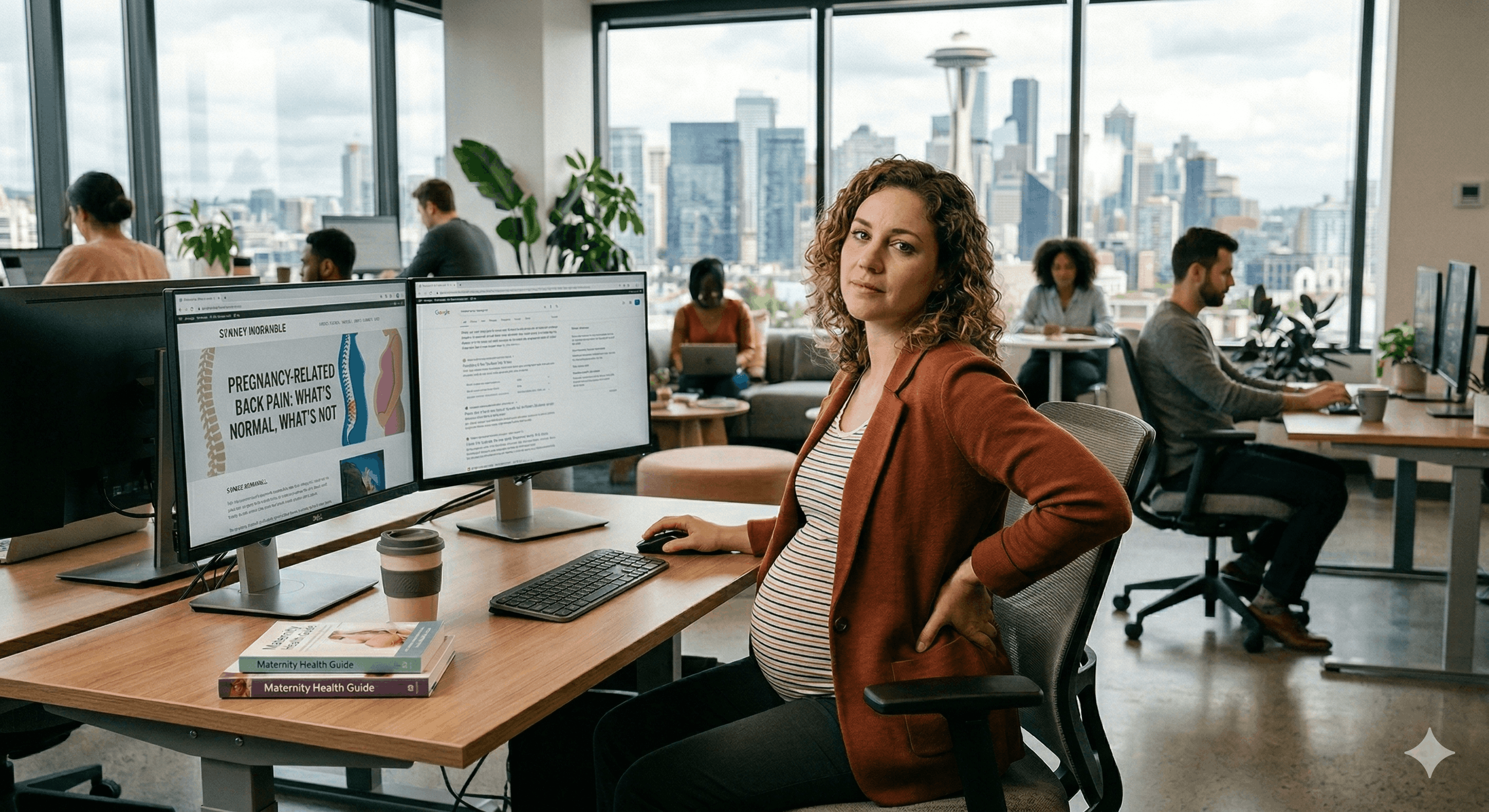
Up to 70% of pregnant women experience back or pelvic pain. That doesn’t make it normal, inevitable, or something you should just push through. Here’s what’s actually going on — and what good physiotherapy does about it.
The Part Nobody Tells You
Back pain is one of the most common things we treat at City Physio in Martin Place, and too often pregnancy-related back pain is one of the most undertreated. Too many women are told it’s “just part of pregnancy,” given a heat pack, and sent on their way. That’s not good enough.
I feel I’m going to repeat this a few times… Too often junior clinicians are too gentle, not specific enough and often afraid of treating a pregnant body. We will treat you and meet you exactly where you’re at. No fluff, clinically excellent but safe treatment, always.
Whether you’re a professional trying to stay functional through your third trimester, an active person managing a training load, or simply someone who’d like to sleep without wincing – pregnancy-related back pain is diagnosable, treatable, and in most cases significantly improvable with the right physiotherapy.
The key word there is right. Because “pregnancy back pain” isn’t one thing. It’s several distinct conditions, each with different causes, different clinical features, and different treatment approaches. Getting the diagnosis right is where everything starts.
Four Types of Pregnancy-Related Back Pain (And Why It Matters Which One You Have)
1. Lumbar Spine Pain – Mechanical Lower Back Pain
What’s happening: As your centre of gravity shifts forward with a growing belly, your lumbar lordosis (the inward curve of your lower back) increases to compensate. At the same time, the deep abdominal muscles that help manage load through your spine become progressively less effective as they’re stretched around the uterus. The result is increased compressive load through the lumbar vertebrae and discs – the same mechanism that causes lower back pain in non-pregnant people, just with added physiological complexity.
What it feels like:
- Central or bilateral aching in the lower back
- Pain that builds with prolonged sitting or standing
- Paraspinal muscle tightness – that deep, locked-up feeling either side of the spine
- Reduced tolerance to sustained postures, improving with movement
- Stiffness in the morning that eases through the day
How we treat it: Assessment of lumbar mechanics, deep core reactivation, and progressive loading to restore spinal stability without aggravating symptoms. This is not about bed rest – appropriate, tailored movement and specific physio manual therapy is one of the most effective interventions available!
2. Pelvic Girdle Pain (PGP)
What’s happening: Pelvic girdle pain is the one most commonly mislabelled as general “pregnancy back pain” – and it’s distinct enough to warrant its own category. PGP is primarily a load-transfer dysfunction: the sacroiliac joints and pubic symphysis are struggling to manage asymmetrical loading, largely because hormonal changes (relaxin and progesterone) have increased ligamentous laxity throughout the pelvis. This is a necessary adaptation for childbirth – but without adequate muscular support, it becomes a significant source of pain and instability.
What it feels like:
- Pain directly over the sacroiliac joints (the dimples at the back of the pelvis)
- Pain with walking, climbing stairs, or any single-leg activity
- Difficulty turning over in bed – a classic and underappreciated symptom
- Clicking, instability, or a sense that something is shifting
- Pain with prolonged sitting or transitioning from sit to stand
PGP is often more functionally limiting than lumbar pain, and it responds extremely well to early physiotherapy intervention. Waiting it out is rarely a good strategy.
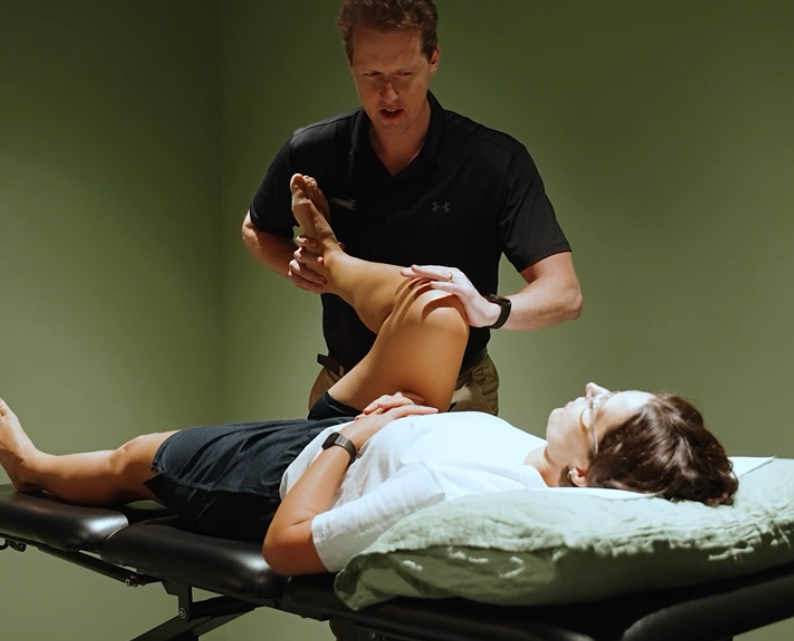
How we treat it: Load management, gluteal and pelvic floor strengthening, specific manual therapy techniques that are safe in pregnancy, and education on positions and movements to avoid and modify. We do not use aggressive mobilisation of the sacroiliac joints during pregnancy BUT we also don’t treat you like you’re made of glass! Too often junior clinicans are too gentle, not specific enough and often afraid of treating a pregnant body. This is a delicate balance that can only be achieved with clinical experience. We will treat you and meet you exactly where you’re at. No fluff, clinically excellent but safe treatment, always.
3. Sciatic-Type Pain During Pregnancy
What’s happening: True lumbar disc herniation is actually uncommon during pregnancy. What’s far more common is sciatic-type pain driven by gluteal muscle tension, pelvic instability, or altered neural sensitivity… all of which are understandable consequences of the biomechanical changes described above. The piriformis muscle, which sits deep in the buttock and can compress the sciatic nerve when it’s overworked, is frequently the culprit.
What it feels like:
- Radiating pain down one leg, into the buttock or posterior thigh
- Burning, tingling, or numbness
- Symptoms that worsen with prolonged sitting or walking
- Pain that feels deep and hard to stretch out
How we treat it: Careful clinical assessment first – distinguishing between neural irritation from the lumbar spine versus muscular referral from the gluteals makes a significant difference to treatment. We’ll use gentle neural mobilisation where appropriate, alongside gluteal and hip strengthening to remove the load from the irritated structures. I’m going to repeat this a few times, i feel! Too often junior clinicans are too gentle, not specific enough and often afraid of treating a pregnant body. We will treat you and meet you exactly where you’re at. No fluff, clinically excellent but safe treatment, always.
4. Round Ligament Pain
What’s happening: The round ligaments run from the uterus to the groin, and as the uterus expands through pregnancy they’re placed under increasing tension. They don’t cope well with sudden, rapid loading – hence the characteristic sharp, grabbing pain triggered by unexpected movements.
What it feels like:
- Sharp, stabbing or pulling pain in the lower abdomen or groin
- Triggered by coughing, sneezing, rolling over, or standing up quickly
- Usually brief – seconds to minutes – and then resolves
- Typically one-sided
Round ligament pain is transient and doesn’t usually indicate anything sinister. It’s also frequently misdiagnosed as pelvic girdle pain, which matters because the management is different. That said, persistent or worsening lower abdominal pain during pregnancy always warrants professional assessment to exclude other pathology.
What’s Actually Causing It: The Physiology in Plain English
You don’t need a physiology degree to understand why pregnancy back pain happens – but knowing the basics helps explain why the solutions work.
Hormonal changes: Relaxin and progesterone increase the extensibility of ligaments throughout your body – necessary for childbirth, but it reduces passive joint stability, particularly in the pelvis. This is why muscular support becomes so critical during pregnancy.
Load redistribution: A growing belly shifts your centre of mass forward. Your spine has to work harder to keep you upright, and the distribution of forces through your lumbar discs and sacroiliac joints changes significantly.
Abdominal wall adaptation: The transversus abdominis – the deep stabilising muscle that wraps around your trunk – lengthens as the uterus expands. Its ability to generate tension and manage spinal load is reduced. This doesn’t mean you stop using it; it means you need to retrain how you use it.
Gluteal inhibition: Pain and altered movement patterns often cause the gluteal muscles to switch off. The glutes are the primary stabilisers of the pelvis. When they’re not doing their job, the sacroiliac joints and lumbar spine absorb the load instead.
Reduced movement: Fatigue, discomfort, and well-meaning but outdated advice to “take it easy” can reduce activity levels – which further decreases muscular strength and joint resilience. The irony is that appropriate movement is one of the most powerful tools for managing pregnancy back pain.
Exercise During Pregnancy: More Is (Carefully) More
Contrary to the advice many women still receive, appropriate exercise during pregnancy is one of the most evidence-supported interventions for back and pelvic pain. The key word is appropriate – trimester, symptom, and individual capacity all matter. This is not the time for generic YouTube workouts.
What we typically focus on:
- Deep core activation: Retraining the transversus abdominis and coordinating it with breathing mechanics. This is not “sucking in” – it’s a specific neuromuscular skill!
- Gluteal strengthening: Side-lying clams, supported hip abduction, modified bridges in pain-free range. Keeping the glutes working is central to pelvic stability.
- Functional strength: Supported squats, sit-to-stand retraining, step modifications. Maintaining the strength to manage daily tasks as load increases.
- Thoracic mobility: Gentle rotation and extension to maintain movement in the upper back – important for both posture and managing the compensatory changes occurring below.
What to be cautious with if you’re symptomatic: High-impact plyometrics, heavy unilateral loading, aggressive abdominal bracing, and deep twisting under load are typically modified or avoided depending on presentation. We’ll guide you specifically, blanket prohibitions aren’t helpful either.
Postnatal Recovery: It Doesn’t Always Just Resolve
One of the most important things we want Sydney women to know: pregnancy-related back pain does not automatically resolve after delivery. Many women present months postpartum with ongoing lumbar or pelvic symptoms that were never properly rehabilitated.
Postnatal physiotherapy at City Physio addresses:
Abdominal wall integrity: Screening and managing diastasis recti (separation of the abdominal muscles), and progressively restoring tension through the anterior core.
Pelvic floor coordination: Rebuilding the functional relationship between the diaphragm, abdominal wall, and pelvic floor. These structures work as a system – rehabilitating them in isolation rarely produces lasting results.
Progressive return to load: A structured, evidence-based pathway back to running, strength training, lifting, and occupational demands. The “wait 6 weeks and then do whatever you want” approach is not evidence-based and leads to avoidable setbacks.
Movement retraining: Optimising everyday mechanics – lifting a pram, carrying an infant, returning to desk work – so daily tasks don’t undo your recovery progress.
The goal is a return to full function: your training, your work, and your life, not just the absence of pain.
When to See a Physiotherapist (Don’t Wait Until It’s Unbearable)
Get assessed promptly if you experience:
- Pain that’s disturbing your sleep
- Difficulty walking or climbing stairs
- Pain radiating below the knee
- Any sense of pelvic instability or giving way
- Ongoing pain beyond 6–8 weeks postpartum
- Symptoms that are worsening rather than fluctuating
Early physiotherapy intervention meaningfully improves functional outcomes and reduces the risk of pain becoming chronic. It is safe throughout pregnancy when provided by a physiotherapist experienced in antenatal care – which is exactly what our team at City Physio provides.
Pregnancy Physiotherapy at City Physio, Martin Place – Sydney CBD
We treat pregnancy-related back pain, pelvic girdle pain, sciatic symptoms, round ligament irritation, and postnatal rehabilitation at our clinic at 25 Martin Place, in the heart of Sydney’s CBD.
Our clinical team includes physiotherapists with specific expertise in women’s health, sports performance, and musculoskeletal rehabilitation – and we have an integrated Pilates studio on-site for when Clinical Pilates is the right tool for your rehabilitation.
We understand the demands of staying functional during pregnancy, whether you’re managing a professional workload, maintaining your training, or just trying to sleep comfortably. Our approach is thorough, evidence-based, and direct. We will tell you what’s going on, what we’re doing about it, and what you need to do between sessions.
Book a Pregnancy Physiotherapy Assessment in Sydney CBD
 City Physio & Pilates Shop 10, Level 6, 25 Martin Place, Sydney CBD NSW 2000 (Rear of the food court – follow the signs)
 (02) 9223 1575
  hello@cityphysio.com.au
  cityphysio.com.au
Monday – Friday | 7:00am – 6:00pm
Pain during pregnancy is common. Suffering through it without support is not a requirement.