By the City Physio team
Short answer. Masseter Botox can reduce clenching force for a while, but clenching is usually driven by something else: stress, neck and head posture, tongue posture or the joint itself. Weakening the masseter without assessing those may shift the load elsewhere. An assessment first helps decide what’s actually needed.
Masseter Botox (masseter tox, jaw slimming injections, Botox for clenching) has become one of the fastest-growing cosmetic and pain procedures around, helped along by social media and a compelling pitch: one injection that eases jaw tension, reduces grinding and slims the jawline.
The demand makes sense. Clenching, grinding and TMJ pain can genuinely wreck sleep, concentration and quality of life. But we’re regularly asked for second opinions by people who’ve spent a lot on injections without anyone first asking the most important question:
Is the masseter actually the problem? And if it is, is weakening it the right answer, or could it make things worse?
Botox is a prescription medicine, and decisions about it sit with your doctor or dentist. This is the physio view.
The masseter is more than a chewing muscle
The masseter runs from the cheekbone to the angle of the lower jaw and closes the jaw with a lot of force. It works with the temporalis (at the temple), the medial and lateral pterygoids (deep inside the jaw), the muscles under the chin that help open the jaw, and the tongue, whose resting position affects how the jaw is loaded.
That whole system is influenced by the neck, posture, breathing and stress. So treating jaw pain with a single injection, without looking at the system around it, can give incomplete results.
What drives clenching and grinding?
Clenching and grinding are usually behaviours driven by something else, and if that something isn’t addressed, the symptoms tend to continue.
- Stress. The jaw is one of the most common places people brace unconsciously, and stress, anxiety and poor sleep can all feed clenching.
- Head and neck posture. As the head drifts forward, the muscles under the chin are put under more tension, and the jaw-closing muscles may have to work harder to keep the teeth together.
- Tongue posture. Where the tongue rests (on the roof of the mouth, the floor, or pushing against the teeth) can change how the jaw sits and how hard the masseter works.
- Sleep position. Sleeping with the jaw pushed into the pillow, or the neck twisted, may contribute to night-time grinding.
- The joint itself. Disc displacement, joint changes or a loose joint can sit underneath clenching and pain.
What we watch for after masseter Botox
- Less feedback from the muscle. The masseter is full of sensors that tell the brain where the jaw is and how hard it’s working. Weakening it may reduce that feedback, which could matter for people with complex jaw mechanics.
- Uneven weakening. Few jaws are symmetrical, and pain is rarely equal on both sides. Uneven effects can change how each joint is loaded, and other muscles may pick up the slack.
- Overload elsewhere. When the masseter is weaker, the temporalis and pterygoids may work harder, which can show up as temple headaches, pain deep near the ear, clicking or restricted opening.
- Spread to nearby muscles. Botox can affect neighbouring facial muscles, which may change your smile or expression until it wears off.
- The tongue problem. If tongue posture is driving the load, weakening the masseter doesn’t remove it. The tongue was the problem; the masseter was the victim.
Questions worth asking before you inject
- Has the masseter been confirmed as the main driver, rather than compensating for the tongue, neck or joint?
- Have both sides of the jaw been assessed?
- Have tongue posture, mouth breathing and neck posture been looked at?
- Has a joint problem been ruled out?
- Is the injection part of a plan, rather than the whole plan?
Our suggestion: assessment first, then a decision about physio, injection or both, with your doctor or dentist.
What jaw physio involves
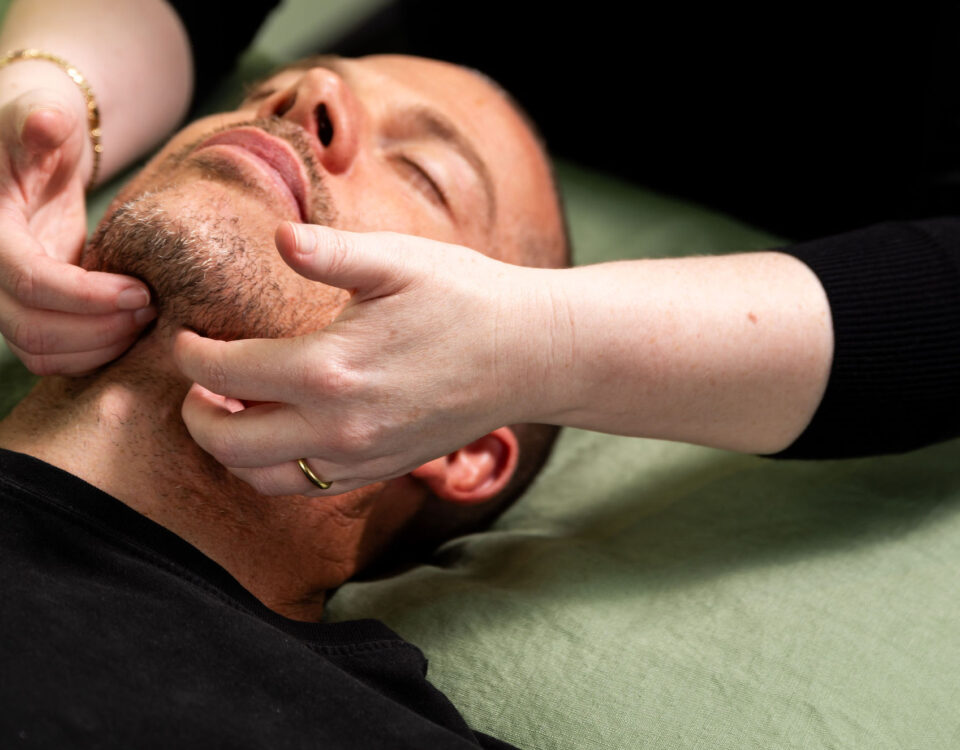
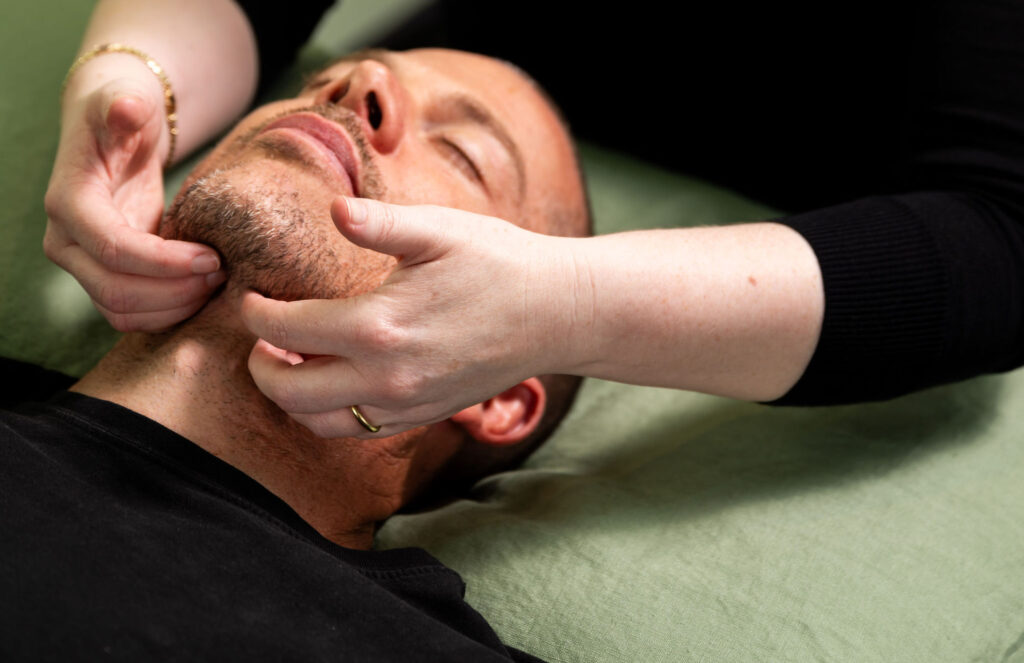
Assessment covers posture and the neck, the joints at the top of the neck, the jaw joints (sounds, range and the path the jaw takes as it opens), the jaw muscles, tongue posture and swallowing, and breathing. Treatment is built around what’s found, and may include:
- manual therapy for the jaw muscles, jaw joint and neck, including inside the mouth where needed
- dry needling of the jaw and neck muscles, where appropriate
- tongue and swallowing exercises
- neck and posture rehab
- breathing work
- building awareness of clenching during the day: teeth apart, tongue resting on the roof of the mouth, lips together
- sleep position, and working with your dentist on a splint where it’s appropriate
Jaw patients can see Nicola, Ed or Matt through a dedicated TMJ appointment. More on TMJ physio and jaw pain. See also our post on the side effects of masseter and trap tox.
Related pages
Common questions
What’s the difference between TMJ pain and clenching pain?
TMJ pain comes from the jaw joint itself, usually in front of the ear, and may come with clicking or locking. Clenching pain comes from overworked jaw muscles and is usually a more spread-out ache in the jaw, temple and face. Many people have both.
I’ve had masseter Botox and my pain is worse. What now?
An assessment can look at what has changed, such as other muscles taking over or the joint being loaded differently, and work on the things the injection hasn’t addressed: the neck, the tongue, posture and the overloaded muscles.
Can physio help instead of Botox?
For many people, the drivers of jaw pain, such as the neck, posture and tongue, are things physio works on directly. Whether injection also has a place is a decision for you and your doctor or dentist.
Want someone to look at it?
Book online or call 9223 1575.
City Physio & Pilates, Shop 10, Level 6, 25 Martin Place, Sydney NSW 2000
Monday to Thursday 7am to 6pm. Friday 8am to 5:30pm.
Search the blog
General information only. It isn’t a substitute for an assessment.