By the City Physio team
Short answer. Headache is a symptom, not a diagnosis. Tension-type headache, migraine and cervicogenic headache have different causes and different treatment, and confusing them can lead to treatment that doesn’t work, or to medication-overuse headache. A thorough assessment using international criteria is where good treatment starts.
“Headache” is a symptom, not a diagnosis. Getting the type right changes the treatment.
Headache is one of the most common complaints there is, and one of the most commonly mismanaged. If you’ve been told it’s migraine but the medication isn’t working, or you’ve been living on over-the-counter painkillers for months, there’s a fair chance the cause has never been properly pinned down.
We’ve been treating headache at Martin Place for a long time. The pattern that stands out: the biggest barrier to getting better is often the wrong diagnosis. Treating the wrong headache type doesn’t just fail. Sometimes it makes things worse.
The ICHD-3, and why it matters to you
The International Classification of Headache Disorders, third edition (ICHD-3), published by the International Headache Society, is the international reference for diagnosing headache. It sets out detailed criteria for a very long list of headache types.
Why should you care? Because the headache you get on a Tuesday afternoon at your desk may be a different condition from the one that wakes you at 3am, even if they feel similar. Lumping them together is like treating all chest pain the same way. The mechanism differs, so the treatment should too.
The three we see most, and see confused most, are tension-type headache, migraine and cervicogenic headache.
1. Tension-type headache
Tension-type headache is the most common headache type. Despite the name, it isn’t simply “being tense”. It typically feels like a band or pressure on both sides of the head, is mild to moderate, isn’t made worse by routine activity like walking or stairs, and doesn’t usually bring nausea.
The sleep connection. Poor sleep and tension-type headache often travel together, and poor sleep may make the nervous system more sensitive to pain. That’s why our headache assessment always asks about sleep, including signs of sleep apnoea. Desk posture, stress, dehydration and skipped meals can play a part too.
2. Migraine
Migraine is a neurological disorder, not just a bad headache. Typical features include one-sided, throbbing pain that’s moderate to severe and made worse by activity, with nausea or vomiting, or sensitivity to both light and sound, lasting hours to days. Some people get an aura beforehand, most often visual changes such as shimmering or flickering lights.
Migraine needs a coordinated medical approach, and physio can be a useful part of it: treatment of the neck, exercise, and working out triggers. We work with GPs and neurologists so physio fits into the wider plan.
3. Cervicogenic headache
Cervicogenic headache is the one we see most, and the one most often mistaken for something else. It’s a secondary headache: the pain starts in the joints and soft tissues at the top of the cervical spine (around C0 to C3) and is referred to the head through the trigeminocervical nucleus, where neck and head pain signals converge. That shared pathway is why it can look so much like migraine.
Clues include pain on one side that doesn’t swap sides, a headache brought on by neck postures or movement, reduced neck movement, and pain that starts at the base of the skull and spreads forward. It’s often linked with desk work or an old neck injury.
Treatment usually combines hands-on treatment of the upper neck joints, retraining of the deep neck flexors, and changes to posture and workstation. A well-known randomised trial found that manual therapy and specific exercise each reduced cervicogenic headache frequency and intensity, with the effect maintained at 12 months.
The medication overuse problem
This is the part that concerns us most: people who have been misdiagnosed spending months or years managing the wrong condition with more and more medication.
Medication-overuse headache is a headache that develops from regular overuse of acute headache medication. Under ICHD-3, it’s headache on 15 or more days a month in someone with an existing headache disorder, with regular overuse of acute medication for more than three months (the threshold is 10 or more days a month for drugs such as triptans and combination painkillers, and 15 or more for simple painkillers).
If you’re taking pain relief for headaches more than a couple of times a week and the headaches are getting more frequent, talk to your GP. The answer isn’t simply less medication. It’s finding out what kind of headache you have and treating that.
What a headache assessment looks like here
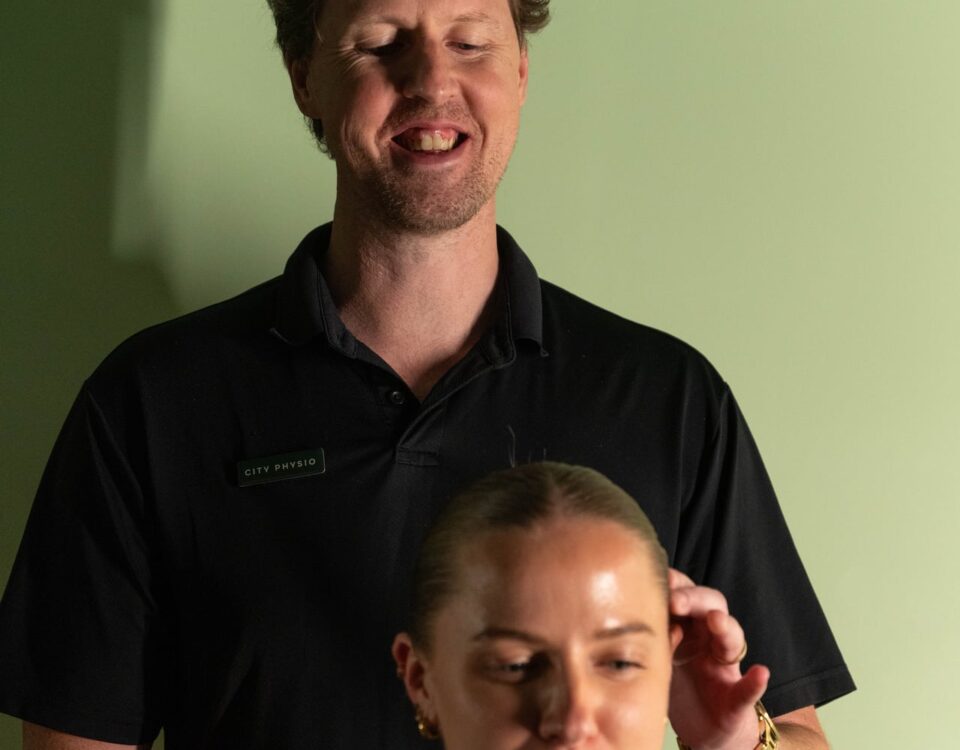
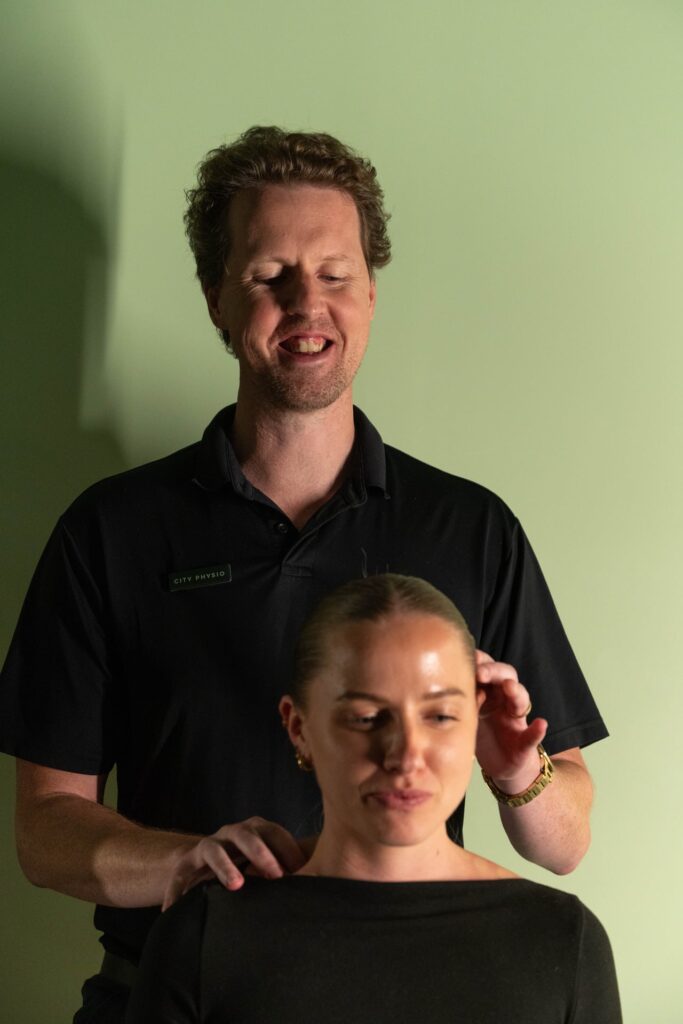
Headache appointments are dedicated appointments, long enough to take a proper history and examine you before any treatment is planned. We look at:
- the headache history: when it started, how often, how long, where, what it feels like, what comes with it, what makes it better or worse, and your medication use
- sleep
- the neck: movement, how each upper neck level moves, the muscles at the base of the skull, and a neurological screen
- the deep neck flexors, using the craniocervical flexion test
- posture and workstation, where relevant
- red flags that need urgent medical review
We then explain what we think is going on in plain language. If your presentation needs a doctor, we’ll tell you.
Headache patients see Nicola, Ed or Matt through a dedicated headache appointment. Nicola Michell is an APA Titled Pain Physiotherapist with a focus on head and neck pain, longstanding headaches and accurate diagnosis of craniofacial pain. We also see jaw pain, which often travels with headache: see TMJ physio. More on headache.
Call 000 or go to an emergency department for
- a sudden, severe headache
- a headache with vomiting, confusion, neck stiffness, fever, or changes in vision
- a headache with loss of balance or a seizure
See a doctor soon for a headache that’s getting steadily worse over weeks, starts after a head injury, wakes you from sleep, or starts when you cough.
Related pages
Common questions
Can physio help headaches?
For cervicogenic headache, physio aimed at the neck has good research support. For tension-type headache, the neck, sleep and lifestyle factors can all be addressed. For migraine, physio can be a useful part of a wider medical plan. In every case, the diagnosis comes first.
How do I know if my headaches are coming from my neck?
A useful clue is whether neck postures or movements bring on or worsen your headache. Others include neck stiffness, tenderness at the base of the skull, and pain that starts at the back of the head and spreads forward. An assessment can help confirm or rule it out.
I’ve had migraines for years. Could they be coming from my neck?
Some people diagnosed with migraine have a neck component, particularly if migraine medication hasn’t helped much. An assessment can help tell them apart.
Do I need a referral?
No. You can book directly. If your policy covers physio, you can claim on private health insurance; we have HICAPS on site.
Sources
International Headache Society. ICHD-3, including 8.2 Medication-overuse headache.
Jull G et al. A randomized controlled trial of exercise and manipulative therapy for cervicogenic headache. Spine 2002;27(17):1835-1843.
Healthdirect, Headaches (warning signs).
Want someone to look at it?
Book online or call 9223 1575.
City Physio & Pilates, Shop 10, Level 6, 25 Martin Place, Sydney NSW 2000
Monday to Thursday 7am to 6pm. Friday 8am to 5:30pm.
Search the blog
General information only. It isn’t a substitute for an assessment.